The minimum age to work at McDonald’s in the US is generally 16 years old — but that’s not a hard cutoff everywhere. Because roughly 95% of McDonald’s locations are owned by independent franchisees rather than the corporation itself, the actual hiring age at any specific restaurant depends on a combination of federal law, your state’s labor laws, and the individual franchisee’s own policy. Some locations hire at 14. Others stick firmly to 16 or even 18 for certain roles.
Here’s how it actually breaks down.
The Three Tiers: 14–15, 16–17, and 18+
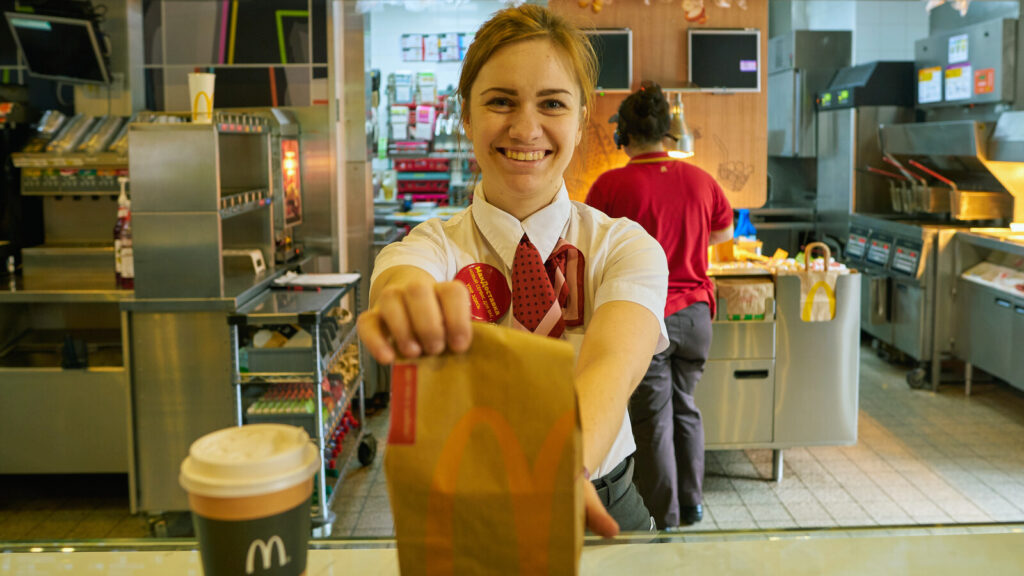
14 and 15 Year Olds
Federal law — specifically the Fair Labor Standards Act — allows 14-year-olds to work in most non-agricultural jobs, including fast food. McDonald’s specifically is permitted to hire workers this young, but with significant restrictions:
Hours you can legally work:
- Up to 3 hours on a school day
- Up to 8 hours on a non-school day
- No more than 18 hours total during a school week
- No more than 40 hours during a non-school week
- Only between 7 a.m. and 7 p.m. during the school year (extended to 9 p.m. from June 1 through Labor Day)
What you can’t do: At 14 and 15, federal law prohibits working in roles that use certain equipment — specifically fryers, grills, most mixers, and meat slicers. This isn’t a McDonald’s rule; it’s a Hazardous Occupations Order enforced by the Department of Labor. A manager can face real legal consequences for putting a 15-year-old near 350-degree fryer oil.
What roles are available: Front counter, drive-thru order-taking, lobby maintenance, dining area cleaning, basic food assembly (pre-packaged items, drinks), and customer-facing tasks. These aren’t busy-work positions — they’re how most crew members start regardless of age.
The franchisee catch: Just because federal law allows 14-year-old hires doesn’t mean every McDonald’s will hire you at 14. Individual franchise owners make that call based on their state’s laws and their own comfort level with managing minor work restrictions. In states like California, New York, and New Jersey, state labor laws are stricter than the federal standard, which matters more than the federal floor. Contact your local restaurant directly — the corporate FAQ on mcdonalds.com confirms that hiring policies vary by location.
16 and 17 Year Olds
This is the most common entry point. At 16, federal hour restrictions no longer apply — though your state may still have its own limits, particularly around late-night school-night hours. You’re also cleared for most kitchen tasks, though some restrictions remain.
At 16 and 17, you can typically work:
- Drive-thru, counter, and customer service roles
- Most food prep and assembly
- Training for shift leadership responsibilities
What’s still off-limits until 18: Operating certain power-driven machinery, driving company vehicles (including motor-powered floor cleaners in some states), and most formal management positions. As one former McDonald’s manager noted publicly: “We’re not letting a 15-year-old near 350-degree fryer oil. That’s just common sense” — and the same logic applies to 16-year-olds on heavy equipment in many states.
18 and Older
At 18, all federal minor restrictions lift. You can work any role — grill, fryer, drive-thru operations manager, shift manager, and above. Corporate career tracks, area supervisor roles, and management training programs require at minimum 18, and usually prior McDonald’s crew experience.
What McDonald’s Actually Pays in 2026?
Pay varies by location based on state minimum wage laws and local market conditions, but the current picture from aggregated data:
For 14-year-olds specifically: ZipRecruiter’s June 2026 data puts the average hourly pay for 14-year-old McDonald’s workers at $13.61/hour, with most earning between $12.50 and $14.90/hour. That’s above the federal minimum wage of $7.25/hour, reflecting that most states have their own higher minimums.
For crew members generally: Starting pay ranges from $10–$12/hour in low minimum wage states to $17–$20/hour in California, New York City, and other high-cost markets. The McDonald’s careers page confirms pay is set at the local level by franchise owners.
Shift managers and above: Typically $14–$18/hour nationally, higher in expensive metro markets.
The bottom line: what McDonald’s pays you is almost entirely determined by where you live, not by the brand itself.
McDonald Employee Benefits Worth Knowing About (Especially for Students)
McDonald’s has a better benefits picture than most people expect for a first job, particularly because of one program many applicants don’t know exists.
Archways to Opportunity: This is McDonald’s education assistance program for employees — it covers tuition assistance for college, helps eligible employees earn a high school diploma, and offers English-language learning courses. Employees who stay and meet eligibility requirements can receive real financial support toward higher education. For a student taking a McDonald’s job partly to save for college, this is worth asking about during hiring.
Employee discount / free meals: Most locations offer a free or heavily discounted meal during shifts. Policies vary by location, but this is nearly universal.
Flexible scheduling: The scheduling tool McDonalds uses (MySchedule) lets crew members view and request changes to their schedule, which is genuinely useful when you’re balancing school, extracurriculars, and work. Franchise managers are generally experienced at accommodating school schedules — it’s essentially a core competency for a chain that hires this many teenagers.
Employee recognition programs: McDonald’s offers Employee of the Month and Employee of the Year recognition at the store level — small things, but they create a clearer path to shift manager consideration than most fast food environments.
How to Actually Apply
Step 1: Check your state’s labor laws first. Before applying anywhere, look up your specific state’s minor labor regulations — not the federal standard, because your state’s rules are what actually matter most. Search “[your state] department of labor minor employment” to find the official source.
Step 2: Contact the specific restaurant you want to work at. Corporate McDonald’s policy and your local franchise’s policy are not necessarily the same. Walk in, ask to speak to the hiring manager, and ask directly what age they hire and what documentation they require for minors.
Step 3: Get your work permit ready if needed. Many states require a work permit for employees under 16, 17, or 18 depending on the state. This usually involves a form signed by a parent and sometimes your school principal or guidance counselor. Don’t show up without it if your state requires one — most managers won’t complete the paperwork for you on the spot.
Step 4: Apply online or in person. McDonald’s has an online application system through their careers website, but walking in and asking for a manager remains effective at most locations. For teen applicants especially, showing initiative and asking questions in person creates a strong first impression.
What the Job at McDonald’s Actually Like?
For a first job, McDonald’s has some genuine advantages over comparable options:
The training is real. McDonald’s runs on highly standardized systems, which means you’ll learn specific processes that transfer to other fast food, retail, and customer service roles later. The skills — reading a queue, maintaining composure during a lunch rush, handling transactions accurately — are genuinely useful.
The pace is challenging. This is not a slow-burn job. Lunch and dinner rushes in most locations are genuinely fast and require focus. For some people this is motivating; for others it’s exhausting. It’s worth being honest with yourself about which type you are before accepting.
Advancement is real if you want it. McDonald’s promotes from within more than its reputation suggests. Crew members who demonstrate reliability and initiative regularly move into shift manager roles within six to twelve months.
The management experience varies a lot. Because each restaurant is owned by an independent franchisee, the management culture varies enormously from location to location. The same brand name doesn’t guarantee the same working environment. Before accepting any offer, check what current and former employees say about that specific location at WiseWorq.
Frequently Asked Questions
Can a 14-year-old work at McDonald’s? Yes, at some locations, under federal and state labor law restrictions. Contact your local restaurant directly — not all franchisees choose to hire at 14.
Does McDonald’s hire at 15? In states where labor law permits it, yes. Same caveats as 14: hour restrictions apply, certain equipment is off-limits, and a work permit is often required.
Do you need a work permit for McDonald’s? Depends on your state and age. Many states require work permits for anyone under 16, 17, or 18. Check your state’s labor department website before applying.
What’s the minimum age to be a shift manager? 18 in most cases, due to the management responsibility and the operational tasks involved.
Can you work at McDonald’s at 16 without restrictions? Federal hour restrictions don’t apply at 16+, but your state may have additional rules — particularly around late-night school-night hours. Some equipment restrictions also still apply until 18.
The Bottom Line
For most US locations, you need to be 16 to work at McDonald’s. If you’re 14 or 15, some franchisees will hire you under federal and state labor law restrictions — but you have to contact the specific location to find out, since the corporate policy defers entirely to individual franchise owners.
What matters most before applying: know your state’s labor laws, get your work permit ready if needed, and go in person rather than relying on an online application alone. The job itself is a legitimate first employment experience with real training, flexible scheduling, and education benefits most applicants never ask about.
Related WiseWorq Guides
- What Jobs Hire at 16? (2026 Guide) — other options if McDonald’s doesn’t work for your age or location
- How Old Do You Have to Be to Work at Target? (2026) — similar age guide for the second-most-searched first-job employer
- What Jobs Can I Do From Home With No Experience? — remote earning options if you’re not yet old enough for in-person work
- Signs of a Toxic Workplace — helpful even for a first job, since not all McDonald’s franchises are equally well managed