
If you’re deciding whether to study computer science or move into IT, you deserve a more honest answer than the one most career sites are giving you.
Here it is: technology is still one of the highest-paying career paths available, and the ceiling remains extraordinary. It is also, right now, one of the hardest fields to enter in twenty years. Both things are true simultaneously, and any article that tells you only one of them is wasting your time.
Computer science graduates currently face 6.1% unemployment — higher than liberal arts graduates. Computer engineering graduates face 7.5%, meaning fine arts majors are currently more employed than computer engineers.
That’s the starting point. Here’s what’s actually happening and what to do about it.
The Hard Part: Entry-Level Has Collapsed
This is the part young people considering tech most need to understand, and it’s rarely stated plainly.
Entry-level developer postings dropped roughly 67% between 2022 and 2026. But the postings number understates the problem. Job listings labeled “entry-level software engineer” actually grew about 47% between October 2023 and November 2024 — while actual hiring into those levels dropped. Companies are advertising junior roles and filling them with experienced engineers.
Big Tech has effectively closed its front door. According to SignalFire’s State of Tech Talent report, built from data on more than 650 million professionals, new-grad hiring in Big Tech is down more than 50% from 2019 levels, and new grads now account for just 7% of Big Tech hires. At startups, new grads are under 6% of hires.
The 22–25 age bracket has been hit hardest. Stanford’s Digital Economy Lab found software developers aged 22–25 saw employment decline nearly 20% from peak. The contraction is concentrated almost entirely on people starting out.
Tech unemployment overall is at a two-decade high. Tech-sector unemployment reached 5.8% in early 2026 — the highest since the dot-com bust of 2001–2002 — and the median time for a displaced tech worker to find new work stretched from 3.2 months in 2024 to 4.7 months in 2026.
Is AI Actually the Cause? Partly.
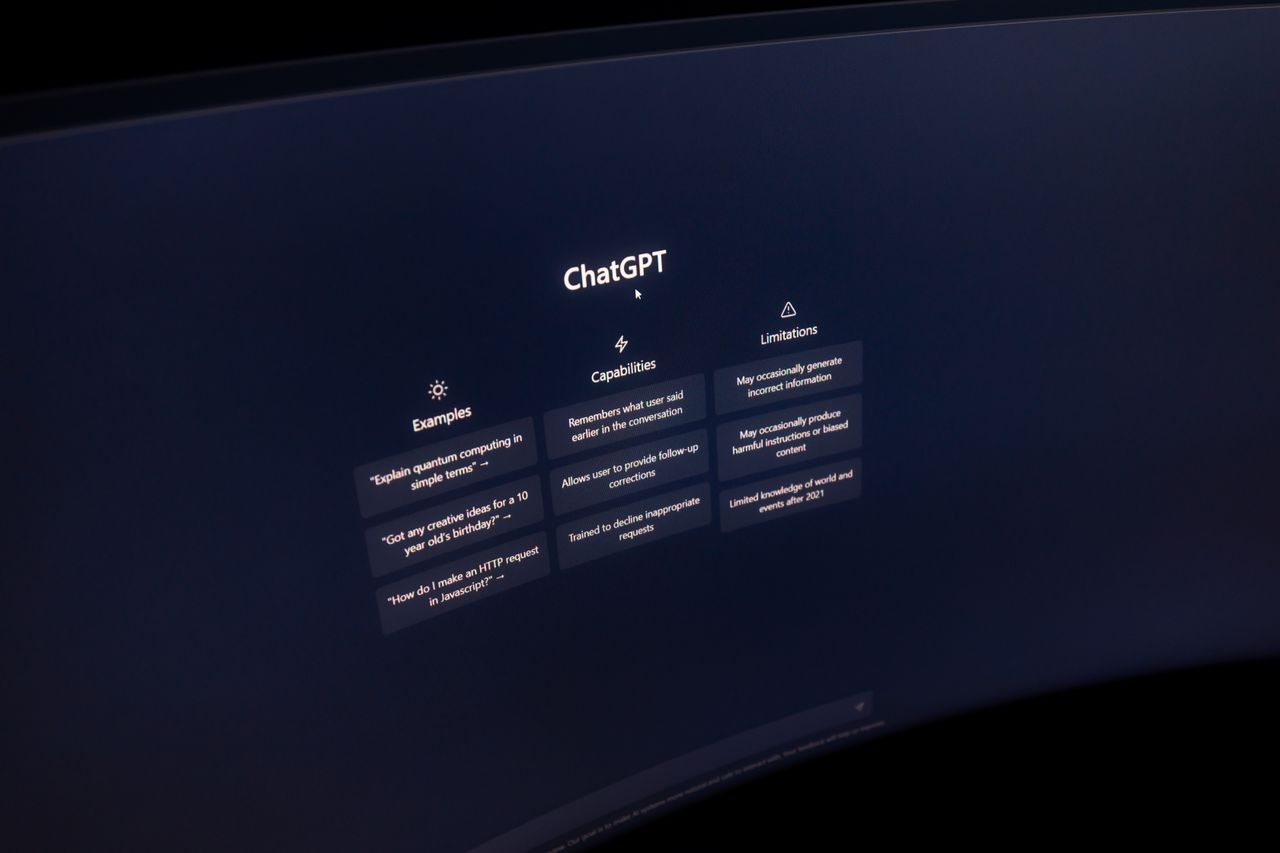
You’ll read that AI destroyed junior developer jobs. The evidence is more complicated, and the nuance matters for anyone making a decade-long decision.
What’s clearly true: 70% of hiring managers in a 2024 SHRM survey said AI can do the jobs of interns, and 57% said they trust AI’s work more than that of interns or recent graduates. Employer sentiment has genuinely shifted. Marc Benioff publicly stated Salesforce was “seriously debating — maybe we aren’t going to hire anybody this year” in engineering, and the company announced zero engineering hires for 2025.
What’s less clear: whether AI is actually doing the work. A METR study found AI tools decreased developer productivity by 19% for experienced developers — directly contradicting the industry narrative. And analysis of the hiring collapse attributes roughly 10% to AI, with the majority driven by economics: budget cuts, interest rates, and correction from pandemic-era overhiring.
The honest read: companies are using AI adoption as justification for hiring decisions they were making anyway for financial reasons. That distinction matters, because economic cycles reverse and structural technological displacement doesn’t.
There’s also a counter-signal worth knowing: Forrester projects a 20% decline in CS enrollments as students react to the current market. Fewer graduates entering now could produce a genuine senior engineer shortage in five to ten years — which is roughly when today’s freshman would be hitting mid-career.
The Good Part: The Pay Is Still Extraordinary
Everything above is real. So is this.
Senior software engineers at Google, Microsoft, and Apple earn $240,000–$310,000 in total compensation. Meta E5 engineers — roughly six years of experience — routinely exceed $400,000. Netflix pays senior engineers $300,000–$600,000, almost entirely in cash rather than stock. NVIDIA’s company-wide median total compensation was $301,233 in its most recent proxy filing.
At the top end, senior ML engineers at AI labs like OpenAI clear $350,000–$550,000+, and data engineers start at $127,000–$180,750 according to Robert Half’s 2026 Salary Guide.
The benefits at major tech employers are genuinely unusual:
- Google: 18 weeks parental leave for birth parents, on-site meals at major campuses, tuition reimbursement, wellness programs, 401(k) match
- Microsoft: genuine hybrid flexibility, extensive learning budgets, ESPP, strong parental leave — and it navigated the 2023–2024 downturn without mass layoffs
- Netflix: unlimited PTO that employees actually use, up to 52 weeks parental leave in the first year
- NVIDIA: 3.7% annual turnover versus a 16–17% semiconductor industry average — the clearest possible signal about how people are treated
- Free food, gyms, commuter benefits, and equipment budgets remain standard across large tech employers
The free cafeteria is real. So is the $400,000 total compensation. The question is entirely about getting through the door.
Where the Jobs Actually Are Right Now

The market hasn’t disappeared. It’s redistributed, and the redistribution is specific enough to plan around.
Growing:
- ML engineer openings are up 59% above pre-pandemic levels, with AI/ML postings growing 85% year over year
- Cybersecurity postings grew 124%
- AI skills carry roughly a 56% wage premium
- Cloud infrastructure and data engineering
- 78% of tech hiring managers plan to increase permanent headcount in the second half of 2026, per Robert Half
Contracting:
- General software engineering postings sit roughly 27% below the pre-pandemic baseline and 69% below the 2022 peak
- Traditional junior developer roles
- QA and manual testing
The overlooked opportunity: small and mid-sized companies. As Aaron Terrazas, chief economist at Gusto, put it: “Small businesses are playing offense. When big employers pull back on entry-level hiring, small businesses see an opening.”
Today’s graduates have a specific advantage at these firms: they’re the first cohort to complete their entire education in the generative AI era, which makes AI-native fluency a genuine differentiator at companies that haven’t built dedicated AI teams yet.
What Engineers Actually Say About the Work
Beyond the market data, the day-to-day realities show up consistently in developer surveys and forums.
Burnout is real and widespread. Roughly 57% of tech workers report burnout symptoms, citing workload, deadline pressure, and unclear career progression. Long hours are common at startups chasing growth targets and at large companies operating global systems.
AI tools are now table stakes, not optional. 84% of developers now use AI tools, up 14 percentage points from 2023, per Stack Overflow’s 2025 Developer Survey. If you’re entering the field without fluency in Copilot, Cursor, or similar tooling, you’re behind before you apply.
The learning never stops, and that’s genuinely tiring for some people. Frameworks change annually. Languages cycle. The skill set that made you employable in 2020 needs meaningful updating by 2026. Some people find this energizing. Others find it exhausting, and that’s a legitimate reason to choose differently.
Job security is better than the layoff headlines suggest — once you’re established. The contraction is overwhelmingly concentrated on entry-level. Experienced engineers with in-demand specializations still move between roles relatively quickly.
Should You Still Study Computer Science?
An honest framework rather than a verdict:
Study CS if:
- You genuinely enjoy building things, not just the salary reports
- You’ll build a real portfolio during school, not just complete coursework
- You can secure internships — these have shifted from advantageous to close to mandatory
- You’re willing to specialize early in AI/ML, security, or cloud rather than staying general
- You can accept that your first role may be at a company you’ve never heard of
Consider alternatives if:
- The salary is your primary motivation — the entry-level bottleneck may prevent you from ever reaching those numbers
- You’re expecting the degree alone to produce job offers, as it did in 2021
- Continuous self-directed learning sounds like a burden rather than a feature
- You need a clear, predictable path from graduation to employment
The strongest position for anyone entering now: combine technical skills with a domain. Healthcare informatics, fintech, industrial automation, defense systems, climate tech. The pure-software market is the one that contracted. The intersection roles didn’t, and they’re substantially less competitive.
What to Do If You’re Already Committed

Build public evidence, not just credentials. In a market where companies post junior roles and hire seniors into them, a transcript isn’t enough. Ship projects. Contribute to open source. Turn coursework into public case studies. If an employer can see how you think, you escape the pile of identical résumés.
Get AI-fluent immediately. Not as a specialty — as a baseline. Demonstrate projects where AI tooling meaningfully accelerated your work.
Target small and mid-sized companies first. The Big Tech front door is functionally closed to new grads at 7% of hires. Smaller firms are actively hiring and often provide better early-career learning anyway.
Specialize toward the growth areas. Cybersecurity at +124% posting growth and ML at +85% year over year are not the same market as general software development at 27% below pre-pandemic levels.
Expect the search to take longer than you’ve been told. Median re-employment now runs 4.7 months for displaced workers. Budget for it emotionally and financially.
The Bottom Line
Technology remains a genuinely good career path — for people who enter it with clear eyes.
The compensation is real: $240,000–$400,000+ at senior levels in major tech, with benefits that few other industries match. The intellectual work is real. The mobility across industries is real.
But the path in has narrowed sharply, and pretending otherwise does nobody any favors. If you’re choosing a major right now, understand that a CS degree is no longer a guarantee of anything — it’s a foundation that requires portfolio work, specialization, and realistic targeting to convert into a career.
The people who succeed in tech over the next decade will be the ones who specialized early, built visible evidence of their ability, and were willing to start somewhere unglamorous. That was always somewhat true. It’s now the entire game.
Before accepting any tech role, research the specific employer at WiseWorq — where current and former employees describe the actual working conditions, burnout realities, and management quality behind the recruiting pitch.
Related WiseWorq Guides
- Software Engineer Cover Letter — how to actually get through ATS screening in this market
- Amazon Interview Questions — what Big Tech interviews actually look like from the inside
- Top 10 Highest-Paying Companies in the US — full compensation breakdowns at NVIDIA, Meta, Netflix, and OpenAI
- Is Capital Goods a Good Career Path? — an alternative technical path with a far more open entry point
- Signs of a Toxic Workplace — what tech burnout actually looks like before it happens to you
- 50 Unique Interview Questions to Ask an Employer — the questions that reveal a real engineering culture