
If you read an energy careers article written before 2025, throw it out.
The advice was straightforward then: go into renewables. Solar and wind were the fastest-growing occupations in America, federal money was flowing, and the transition looked like a one-way road. Anyone entering the field was told to point themselves at clean energy and let the tailwind do the work.
That advice is now actively dangerous, and the data explaining why is stark.
At the same time — and this is the part almost nobody has caught up to — the energy sector as a whole is experiencing its biggest demand surge in fifty years. US electricity demand is growing again after two decades of being flat, and the utilities that deliver it are planning at least $1.4 trillion in capital expenditure through 2030, a 21% increase over what the same companies planned just a year earlier.
Both things are true. Energy is a good career path right now — but which part of energy matters more than it has at any point in living memory.
The Hard Part: Clean Energy Contracted Sharply
This is what changed, and it changed fast.
Following the One Big Beautiful Bill Act and subsequent federal policy rollbacks, E2 tracked 216 large-scale clean energy and clean vehicle projects cancelled, closed, or downsized between January 2025 and May 2026. Modeling by BW Research estimates those projects would have supported 468,000 jobs — roughly 343,500 permanent operational roles and 124,500 construction jobs — along with $55 billion in annual GDP.
The contraction continued into 2026. The Environmental Defense Fund and Atlas Public Policy found the US lost a net 5,600 clean energy manufacturing jobs in Q1 2026 alone, alongside $1.4 billion in cancelled investment.
The specific losses are not abstract:
- QCells, a solar manufacturer in Georgia, furloughed 1,000 workers and permanently laid off 300
- Enphase Energy cut roughly 6% of its workforce, blaming the end of the Residential Clean Energy Tax Credit for collapsing demand
- An EV battery plant in Kentucky closed entirely, eliminating 1,600 jobs
- A North Carolina solar firm laid off 78% of its workforce after filing for bankruptcy
- Leading Light Wind cancelled an offshore project in New Jersey that would have powered a million homes
Between 2021 and 2024, clean energy manufacturing announced more than $200 billion in investment and over 200,000 jobs. As Matthew Vining of Atlas Public Policy described the reversal: cuts to tax credits, restrictions on wind and solar permitting, and lowered vehicle emissions standards “just ended up introducing a lot of uncertainty for manufacturers.”
What this means practically: if you’re choosing a training program, a degree concentration, or a first job in 2026, “renewable energy” as a general category is no longer the safe default it was three years ago. Some segments within it remain strong. But the sector-wide tailwind is gone, and policy risk is now a real factor in your career planning.
The Good Part: Electricity Demand Is Exploding
Here’s what the pessimistic version misses entirely.
For roughly twenty years, US electricity demand was essentially flat. Efficiency gains offset growth. That era ended. The EIA projects demand rising from a record 4,097 billion kWh in 2024 to roughly 4,250 billion kWh in 2026, with record highs in both 2025 and 2026.
The driver is AI. US data center electricity demand surged from 23 GW in 2023 to 42 GW in 2026, and Bank of America projects data centers alone could add roughly 125 GW of US electric load, pushing overall electricity demand growth to a 4.1% compound annual growth rate from 2026 through 2030.
That demand has to be generated, transmitted, and delivered — by people.
The bottleneck is physical and severe. The US interconnection queue has ballooned to over 2,600 GW with average wait times approaching five years. Large gas turbines are largely sold out through 2030. Nearly half of US AI data centers planned for 2026 are delayed.
You cannot solve those problems without electrical engineers, lineworkers, substation technicians, grid planners, turbine mechanics, and reactor operators. There aren’t enough of them, and the shortage is measurable: 35% of data center operators report losing staff to competitors.
Nuclear came back. Microsoft’s Three Mile Island restart will deliver 835 MW by 2027. Microsoft, Amazon, and Google are signing direct 20-year power purchase agreements with reactor operators. For the first time since the 1970s, nuclear is a genuine growth industry — and its workforce is aging into retirement at exactly the wrong moment.
Where the Best Jobs in the Energy Sector?
Strongest right now:
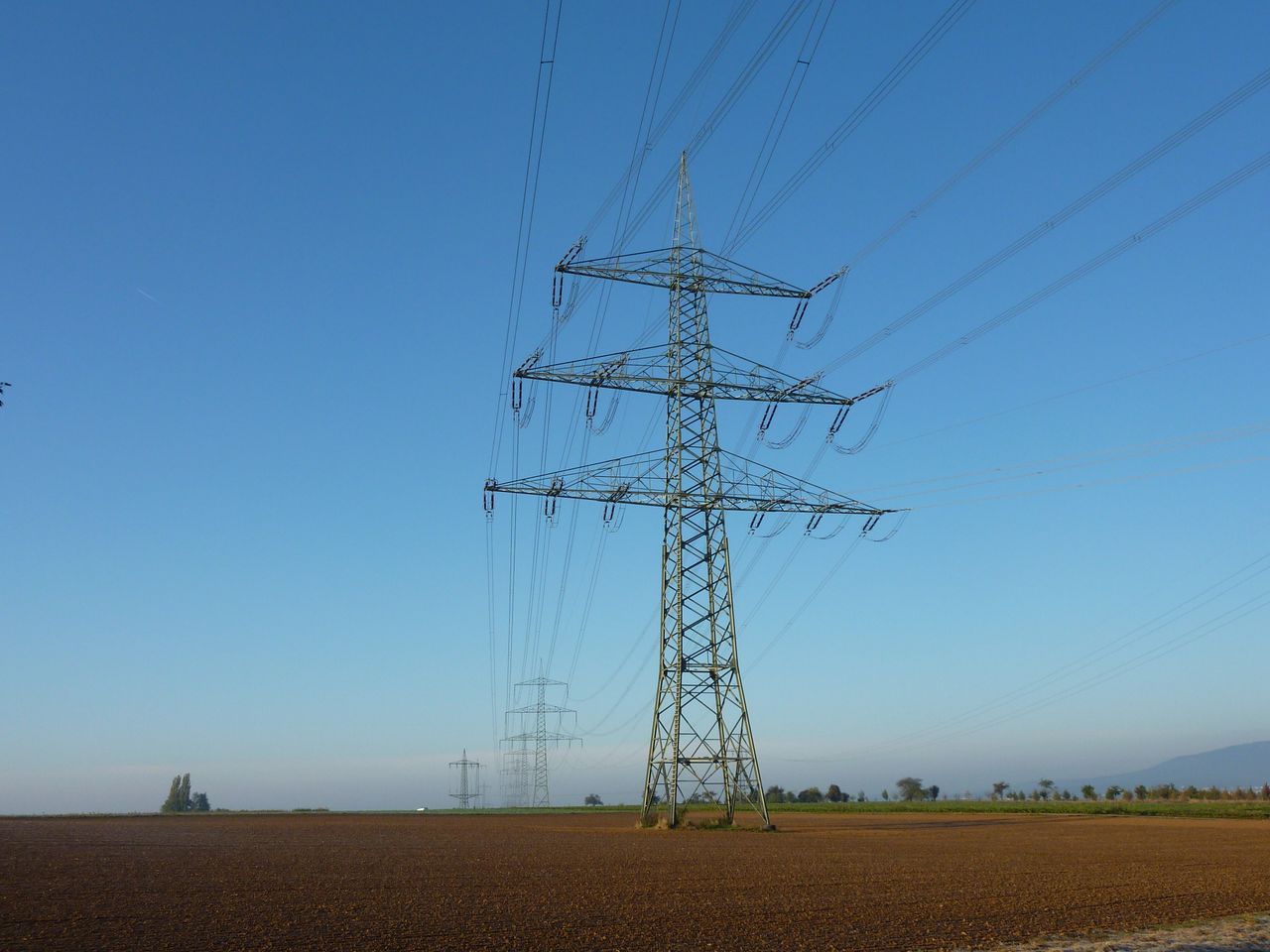
- Grid and transmission — lineworkers, substation technicians, transmission planners, protection engineers. Utilities are spending $1.4 trillion and cannot hire fast enough.
- Nuclear operations — Constellation’s licensed reactor operator track requires no four-year degree and pays $80,000–$150,000 all-in. Genuinely one of the most underrated career paths in the country.
- Gas turbine manufacturing and service — GE Vernova’s backlog is described as the single largest engineering hiring pull in the power sector, centered on Schenectady, Greenville, and Stafford.
- Data center electrical and mechanical infrastructure — Vertiv and Eaton run field service technician programs converting AAS-credentialed candidates into $40+/hour roles with heavy overtime.
- Battery storage — even amid manufacturing cancellations, storage deployment continues because utilities need it for grid stability.
Weaker than advertised:
- Solar and wind manufacturing — the cancellations are concentrated here
- EV and battery manufacturing — 15% of announced EV investments and 12% of battery investments were cancelled between January 2025 and Q1 2026
- Offshore wind — hit hardest by federal permitting restrictions
- Residential solar installation — directly damaged by the residential tax credit’s elimination
Still solid but cyclical:
- Oil and gas — extraction workers average $44.31/hour per BLS, the highest in the energy sector, but boom-bust exposure is structural rather than incidental.
What Energy Actually Pays
| Role | Typical Range | Entry Requirement |
|---|---|---|
| Lineworker | $85,000–$100,000+ | Apprenticeship, no degree |
| Licensed reactor operator | $80,000–$150,000 | No four-year degree required |
| Data center field service tech | $80,000–$110,000 | AAS + certifications |
| Power plant operator | $68,000–$109,000 | On-the-job training + license |
| Wind turbine technician | $57,000–$80,000 | 2-year community college |
| Solar PV installer | $42,000–$78,000 | Short certification |
| Electrical engineer (utility) | $88,000–$120,000 | BS Electrical Engineering |
| Grid/transmission engineer | $95,000–$140,000 | BS + experience |
| Petroleum engineer | $100,000–$160,000+ | BS Petroleum Engineering |
The overtime factor is significant and frequently understated. Lineworkers and plant operators regularly add $10,000–$15,000 annually through storm response and shift differentials. For a fuller breakdown, see our guide on what energy jobs pay.
The Honest Downsides
Policy risk is now a career risk. This is new. An energy professional in 2019 didn’t need to track federal tax credit legislation to assess their job security. In 2026, someone in solar manufacturing absolutely does. That volatility cuts both ways and can reverse again — but planning around it is now part of the job.
Geography constrains you heavily. Grid and generation work happens where the infrastructure is. Data center power demand is concentrating sharply: data centers consumed 26% of Virginia’s electricity in 2023, projected to reach 41–59% by 2030, with Arizona, Iowa, Nebraska, Nevada, Oregon, Indiana, and Wyoming potentially exceeding 20%. The jobs follow the load. Remote work is rare.
The physical demands are genuine. Linework means climbing poles in weather. Plant operations mean 12-hour rotating shifts including nights, weekends, and holidays. Field service means travel. These aren’t disqualifying for the right person, but they’re not what “clean energy career” typically conjures.
Public perception versus reality. Working in oil and gas or extending coal plant life to serve data centers carries reputational weight some people won’t want. That’s a legitimate consideration worth being honest with yourself about early.
Should You Enter Energy?
Strong yes if:
- You’re willing to train in grid, transmission, nuclear, or power infrastructure specifically
- You want high pay without a four-year degree — the trades and operator paths here are among the best in the economy
- You can live where the infrastructure is
- Shift work or field travel doesn’t disqualify you
- You want work that’s genuinely automation-resistant
Think harder if:
- You’re specifically drawn to solar or wind manufacturing right now
- You need remote or location-flexible work
- You want to avoid any association with fossil generation
- Policy volatility would stress you significantly
The strongest recommendation: if you’re entering energy in 2026, aim at the grid rather than at generation technology. Transmission, distribution, substation work, and power systems engineering are technology-agnostic — the electrons need to move regardless of whether they came from a reactor, a turbine, or a solar farm. That insulates you from exactly the policy risk that just cost 468,000 planned jobs.
Nuclear operations deserves specific mention as the most underrated option available: no four-year degree required, six-figure earnings, and an industry that just became a growth story for the first time in five decades.
The Bottom Line
Energy remains a genuinely good career path — arguably better than it’s been in years, because demand is growing for the first time since the early 2000s and the workforce to meet it doesn’t exist yet.
But the clean energy tailwind that made the last decade’s advice simple is gone, at least for now. The 468,000 jobs lost to cancelled projects since January 2025 are real, and anyone telling you to just “go into renewables” hasn’t looked at the data.
Point yourself at the grid. Point yourself at nuclear. Point yourself at the physical infrastructure that has to get built regardless of which administration is in office and which generation technology wins. That’s where the shortage is, that’s where the money is, and that’s the part of energy that isn’t going anywhere.
Before accepting any offer, research the specific employer at WiseWorq — where current and former employees describe actual working conditions, overtime realities, and management quality behind the recruiting pitch.
Related WiseWorq Guides
- What Do Energy Jobs Pay? — full salary breakdown across oil, gas, renewables, and utilities
- Is Oil & Gas Production a Good Career Path? — the same honest analysis applied to extraction specifically
- What Do Public Utilities Jobs Pay? — the grid and utility roles this article recommends, with company-level data
- How Many Jobs Are Available in Public Utilities? — sector size, state concentration, and degree requirements
- Is Technology a Good Career Path? — the industry driving the electricity demand described here
- Is Capital Goods a Good Career Path? — GE Vernova, Siemens Energy, and the equipment side of the power buildout