
Capital goods is one of those industry labels that sounds more specific than it is. In practice, it covers everything from the F-35 fighter jet to the tractor harvesting soybeans in Iowa to the industrial robot welding car frames in Michigan. What ties them together: these are products that businesses buy to produce other things — not goods that end up in a consumer’s hands directly.
The S&P 500 classifies the capital goods field as part of the “Industrials” sector, which accounts for roughly 9% of the entire index by market cap. The companies in it employ millions of Americans across engineering, manufacturing, software, operations, and corporate functions. And because capital goods companies tend to be large, technically complex, and long-cycle in nature, they offer career stability and compensation that many consumer-facing industries can’t match.
This guide breaks the field into its major sectors, names the leading US companies in each, and gives you honest data — Glassdoor ratings, real employee quotes, salary ranges — rather than the polished version from a corporate careers page.
What Counts as a Capital Good?
Before the companies: a quick, practical definition. A capital good is any physical asset that a business uses to produce goods or services. The key test is whether a business buys it to make something else, rather than to consume it directly.
Examples: a Boeing 737 jet bought by an airline, a Caterpillar excavator bought by a construction company, a John Deere tractor bought by a farm, a Siemens industrial turbine bought by a power plant, a 3M adhesive bought by an auto manufacturer. None of those end up in a consumer’s hands as purchased — they’re tools of production.
The sector divides roughly into five categories: aerospace and defense, heavy machinery and construction equipment, industrial automation and robotics, transportation and logistics equipment, and industrial conglomerates. Here’s who the major US players are in each, and what working there is actually like.
1. Aerospace and Defense

This is the most technically prestigious and best-compensated segment of the capital goods field. Defense contractors specifically benefit from long-cycle government contracts that provide unusual revenue stability compared to commercially dependent manufacturers.
Boeing
Glassdoor rating: 3.7 / 5 (20,622 reviews) Salary range: $55,000 (entry manufacturing) to $160,000+ (senior engineering) 71% of employees would recommend it
Boeing is simultaneously one of the most recognizable employers in American manufacturing and one of the most complicated to evaluate honestly. The benefits are genuinely strong — employees consistently highlight “immediately vesting 401k with 100% company match up to 10% salary” and “good salary and plenty of OT opportunities.” The working environment for engineers and technical staff is often described positively: “There are a lot of great people that are very down to earth.”
The complications are equally well-documented. Boeing’s quality control crises between 2022 and 2025 — the 737 MAX door plug failures, the resulting FAA scrutiny, and significant workforce reductions — created an internal environment employees describe as “frequent layoffs and outsourcing to vendors” and “toxic culture and crab mentality.” The 2024 strike by IAM union members further strained labor relations.
The honest picture in 2026: Boeing is stabilizing after a turbulent period. The engineering roles, the mission, and the compensation are real draws. The management accountability issues and the job security concerns are also real. It’s a company worth researching at the specific division level — not all Boeing programs are in the same position.
Lockheed Martin
Glassdoor rating: 4.1 / 5 (16,691 reviews) Salary range: $60,000 (entry engineer) to $180,000+ (program manager) 83% of employees would recommend it 4.2 / 5 for work-life balance — notably high for defense
Lockheed Martin earns the strongest overall employee ratings of any major aerospace and defense employer, and a few specifics explain why. The 9×80 schedule — nine-day work fortnight with every other Friday off — is a genuine quality-of-life differentiator that most defense competitors don’t offer. As one long-tenured employee described it on Glassdoor: “Lockheed Martin pushes a work-life balance. Most employees enjoy 9×80 workweeks, meaning that we have every other Friday off. All employees have at least 3 weeks of vacation from the day you begin your career.”
The honest caveat, stated plainly in the same review: “Salary is competitive with the defense industry. In other words, do not go here to become rich.” The compensation at Lockheed is solid but below what comparable technical roles pay at NVIDIA, Meta, or OpenAI. The trade-off is stability, mission, and a working culture that multiple employees describe as “great work life balance while feeling satisfied and fulfilled by the work I am performing.”
The management critiques are real and consistent: “some managers have absolutely zero clue how anything actually gets done” and “poor leadership and lack of accountability at high and medium levels” appear repeatedly. Large bureaucratic organizations are not known for excellent middle management, and Lockheed is no exception. But the program-level technical work and the benefits package have kept its ratings consistently above the defense industry average of 3.6.
Raytheon Technologies (RTX)
Raytheon employs over 174,000 people across its Collins Aerospace and Pratt & Whitney divisions in addition to the missile and defense systems work the name is known for. It offers defense-sector stability with meaningful exposure to commercial aviation through Collins, and engineered products that range from jet engines to the space suits used at the International Space Station. Pay and benefits track closely to Lockheed Martin — competitive within the industry, not competitive with tech.
2. Heavy Machinery and Construction Equipment

This segment covers the companies that build the machines that build everything else. It’s more physically demanding, geographically dispersed, and cyclically sensitive than aerospace — tied to construction, mining, and agriculture demand rather than defense budgets.
Caterpillar
Glassdoor rating: 4.0 / 5 (8,324 reviews) Salary range: $40,920 (assembly worker) to $317,911 (director) — Glassdoor June 2026 data Compensation and benefits: 4.1 / 5 Named one of “America’s Greatest Workplaces in Manufacturing 2026” by Newsweek
Caterpillar’s Glassdoor reviews describe a company where the specific experience depends heavily on whether you’re on the factory floor or in a corporate office — and which facility you’re in. The positive themes are consistent: “great company that allows room for growth if you apply yourself” and “work on initiatives that are changing how the company does business.” The benefits and compensation ratings are notably high at 4.1, reflecting CAT’s track record of competitive wages and a strong internal mobility culture.
The criticisms concentrate in two areas: the factory floor experience in some facilities has generated reviews describing inconsistent management and pressure-heavy production environments, and the company’s aggressive relocation of its headquarters from Peoria, Illinois to Irving, Texas in 2022 created real disruption for long-tenured employees who had built lives around the Midwest operation.
For engineers and technology professionals specifically, Caterpillar has made major investments in autonomous and connected equipment — Cat Command remote operation, GPS-guided grading systems, telematics across the fleet — creating genuine software and systems engineering roles at a company where you see the physical results of your work in a way most tech jobs can’t match.
John Deere
Glassdoor rating: 4.0 / 5 (9,482 reviews) 78% would recommend it Compensation and benefits: 4.0 / 5
John Deere’s Glassdoor ratings track Caterpillar’s closely, which makes sense — they’re competing for similar talent in similar markets. The specific differentiators for Deere: a stronger public reputation for precision agriculture technology (autonomous tractors, GPS planting systems, machine learning applied to crop yields), which draws a different profile of software and systems engineers than traditional heavy equipment manufacturers attract.
The honest challenges at Deere mirror what you’d expect from a large, cyclically sensitive industrial company. “Mass layoffs, projects can get boring” and “contractors don’t have benefits like PTO, 401k match” appear in critical reviews — particularly relevant because Deere makes significant use of contract workers during production upswings who bear the first brunt of downturns. The 78% recommendation rate is solid but reflects the reality that manufacturing careers at this scale involve more variability than a polished “best employer” badge suggests.
The 2023 UAW strike settlement significantly improved compensation for hourly workers — skilled trades workers saw increases that pushed senior-level hourly pay substantially above national manufacturing averages.
3. Industrial Automation and Robotics
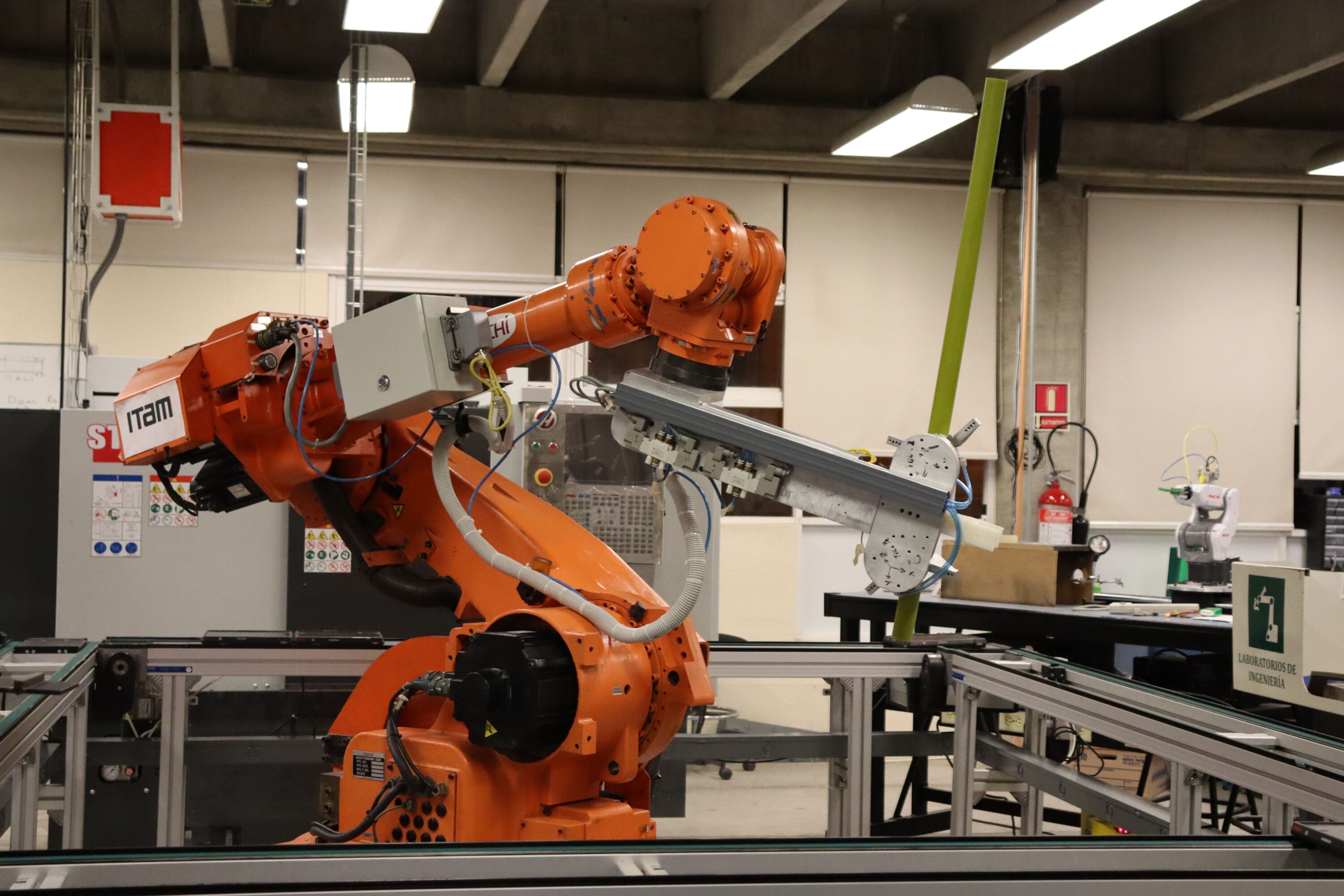
This is the fastest-growing segment within capital goods, and the one most directly reshaping the sector itself. Companies building industrial robots, automation systems, and the software that runs them are creating the tools that are simultaneously growing capital goods manufacturing and reducing some of its traditional roles.
Honeywell International
Glassdoor rating: 3.7 / 5 Salary range: $70,000–$145,000 for engineering roles; strong bonus and equity structures at senior levels
Honeywell is a capital goods conglomerate covering industrial automation, building technologies, advanced materials, and aerospace — which means the employment experience varies enormously by division. The industrial automation segment specifically — process controls, safety systems, SCADA, and Industrial IoT — offers one of the more interesting combinations of hardware and software work available in the sector.
The consistent criticism in Honeywell reviews: a history of cost-cutting and restructuring that has affected employee trust, and compensation that some describe as lagging market rates at the individual contributor level. The pension and benefits historically strong; the recent shift to defined contribution has reduced one of the more distinctive advantages Honeywell once offered.
3M
Glassdoor rating: 3.8 / 5 Salary range: $75,000–$130,000 for technical roles; significant variation by division
3M produces more than 60,000 different products across industrial, healthcare, consumer, and safety markets. For career diversity and intellectual breadth, it’s genuinely unusual — few companies offer the chance to work on dental cement, optical films, and structural adhesives in a single career. The R&D culture is real; 3M has maintained a significant innovation investment even through the cost pressures that have affected other conglomerates.
The challenge: 3M’s PFAS litigation (the “forever chemicals” lawsuits) created multi-billion dollar legal exposure that has shaped company strategy, layoffs, and the spinoff of its healthcare division into Solventum. For prospective employees, the company in 2026 is meaningfully different from what it was five years ago, and research into the specific division you’d be joining matters more than it once did.
4. Transportation and Logistics Equipment

Union Pacific Railroad
Glassdoor rating: 3.6 / 5 Average conductor salary: $80,000–$110,000; engineers earn $100,000–$130,000+
Union Pacific operates 31,800+ route miles across 23 western states — one of the most extensive freight networks in the country. For engineers, conductors, and operations staff, the pay is genuinely strong relative to education requirements. The lifestyle trade-off is real: rail work involves irregular schedules, on-call availability, and extended time away from home for linehaul crews.
Employee reviews consistently highlight the same trade-off the numbers show: good pay, solid benefits, and demanding conditions. A Reddit thread from a UP conductor described the job honestly: “The money is real and so is the lifestyle. You will miss things. Know that going in.”
General Dynamics (Marine Systems and Land Systems)
General Dynamics builds nuclear submarines, surface ships, Stryker combat vehicles, and Gulfstream business jets — a portfolio that spans both defense capital goods and commercial aviation. The Glassdoor rating of 3.9 and strong job security signals reflect the long-cycle nature of defense procurement. You don’t lay off a submarine engineering team because of one difficult quarter.
5. Industrial Conglomerates

GE Aerospace (formerly General Electric)
GE has dramatically restructured since 2021 — spinning off its power business as GE Vernova and its healthcare segment as GE HealthCare, leaving GE Aerospace as the standalone company focused on commercial and military jet engines. The restructuring has clarified the company’s identity in ways that long-term GE employees describe as genuinely positive, with a sharper focus on aviation technology.
GE Aerospace’s employee reviews have improved notably post-restructuring. The company’s F&M (Fuel & Modernization) programs and CFM LEAP engine programs are among the most commercially significant aerospace manufacturing programs in the world.
Who Pays the Best in Capital Goods?
Across all sectors and companies, here’s a realistic salary picture based on 2026 Glassdoor and industry data:
| Company | Assembly/Production | Mid-Level Engineer | Senior Engineer / Manager |
|---|---|---|---|
| Lockheed Martin | $55,000–$75,000 | $90,000–$130,000 | $140,000–$180,000 |
| Boeing | $55,000–$80,000 | $95,000–$140,000 | $145,000–$185,000+ |
| Caterpillar | $40,000–$65,000 | $85,000–$120,000 | $130,000–$200,000+ |
| John Deere | $45,000–$70,000 | $85,000–$120,000 | $125,000–$185,000 |
| Honeywell | $50,000–$70,000 | $80,000–$115,000 | $120,000–$160,000 |
| 3M | $50,000–$65,000 | $80,000–$120,000 | $120,000–$165,000 |
| Union Pacific | $80,000–$110,000 (operations) | $95,000–$130,000 | $130,000–$175,000 |
Figures based on Glassdoor June 2026 submissions and industry salary reporting.
What Employees Consistently Say Across the Sector
After reading through thousands of reviews across these employers, a few patterns appear consistently enough to be worth naming:
The mission matters more here than in most industries. Employees at Lockheed describe working on “machinery that will fight wars and save lives” and feeling “satisfied and fulfilled by the work.” Caterpillar employees describe seeing 40-ton machines they helped build operating in the world. This sense of tangible, physical impact is consistently cited as a reason people stay — often at salaries below what they could earn at tech companies.
Management quality is the biggest variable. Every company on this list has reviews praising team-level culture and reviews criticizing senior management accountability. The difference between a great Caterpillar career and a frustrating one often comes down to the specific plant, team, and manager — not the brand.
Job security is above average, but not absolute. Defense contractors are more insulated from economic cycles than commercial manufacturers. Boeing’s 2024 layoffs and Caterpillar’s periodic headcount reductions demonstrate that even the most stable capital goods employers cycle through workforce adjustments tied to program budgets, union negotiations, and demand cycles.
The tech investment is real. John Deere’s autonomous tractor programs, Caterpillar’s Command remote operation, Honeywell’s Industrial IoT platforms — these are genuine software engineering problems being worked on at companies where you can physically see the output. For software and systems engineers interested in working on problems that exist in the real world, capital goods offers something tech-only companies can’t.
Before accepting any offer in this sector, research the specific company at WiseWorq — and read reviews from people in your specific function and location, not just the company overall. A mechanical engineer at Lockheed’s Skunk Works program and a mechanical engineer at a Lockheed facilities management contract are having very different experiences under the same brand name.
Related WiseWorq Guides
- How Many Jobs Are Available in Capital Goods? — the employment size and sector breakdown for this field
- What Companies Are in the Consumer Durables Field? (2026 Guide) — the consumer-facing counterpart to capital goods
- Is Oil & Gas Production a Good Career Path? — another major industrial sector with overlapping employers
- What Do Energy Jobs Pay? (2026 Guide) — how Siemens, Honeywell, and GE Aerospace pay compares to the energy sector more broadly
- 50 Unique Interview Questions to Ask an Employer (2026) — including questions about program stability and management quality before accepting any defense or manufacturing offer