
Everyone knows to bring a copy of their resume. Most people remember their ID. Fewer people think beyond that — and that’s the gap.
The candidates who get remembered after an interview aren’t the ones who had the best answers. They’re the ones who showed up with something that made the conversation concrete: a portfolio the interviewer could flip through, a reference letter from someone the hiring manager respects, a printed achievement sheet that gave numbers to the claims on their resume, or a certification card that answered the “can you actually do this?” question before it was even asked.
This guide covers what to bring — organized by what type of work you’re interviewing for — and why each item shifts the dynamic in your favor.
The Baseline (What Everyone Should Have)
These are the non-negotiables. If you show up to any interview without these, you’ve already started behind.
5–10 printed resume copies on quality paper. Even if you submitted digitally, bringing printed copies shows preparation and professionalism. Print on white or cream paper, keep them flat in a folder. If a second interviewer joins unexpectedly, you’re covered. If the primary interviewer forgot to print yours, you’ve just saved the situation.
A professional notebook and two pens. Taking notes signals you’re serious about the job and helps you remember important details about the position. The two pens is a small move with outsized impact — if your interviewer needs one, offering it (“keep it, I brought extras”) is a quiet signal of how you operate.
Your government-issued ID. Many companies require ID at reception before you get to the interview room. Don’t make your first impression one of scrambling through your bag at the front desk.
A reference list — pre-formatted on its own page. A few professional contacts ready in case the interviewer asks — previous employers, professors, mentors from internships — printed on a separate page, not buried at the bottom of your resume. Three references minimum, with name, relationship, email, and phone. The act of having this ready rather than saying “I’ll email you later” signals that you anticipated the question.
A printed copy of the job description. This one surprises people. Having the job description in front of you during the interview lets you reference specific requirements as you answer, shows you’ve studied it, and prevents the generic answers that result from forgetting the exact role you’re interviewing for.
What Makes You Actually Stand Out: White-Collar Roles

This is where most guides stop at “bring your resume.” Here’s what the candidates who get called back are bringing.
An Accomplishments Sheet
This is a single page — separate from your resume — that lists four to six specific achievements with numbers. Not “managed a team” but “managed a team of 12 engineers and delivered a $3M product on schedule.” Not “improved marketing results” but “increased conversion rate from 2.1% to 4.7% over six months.”
In a recruiter survey, 58% of recruiters said measurable achievements are what make a candidate stand out. An accomplishments sheet puts those numbers in the interviewer’s hands, literally — they can refer to it during the conversation and take it to the hiring decision meeting after you leave. Your resume is optimized for ATS. This sheet is optimized for the human sitting across from you.
A Portfolio or Work Samples
What counts as a portfolio depends on your field: code repositories for developers, design projects for creatives, writing samples for content professionals, case studies for consultants, presentation decks for salespeople. Even if your industry doesn’t traditionally use portfolios, consider what tangible evidence of your work you could share.
The physical version matters even in an age of digital portfolios. Bring a printed mini-portfolio — four to six pages of your best work — in addition to having a digital version ready on your phone or laptop. Interviewers who can physically hold something engage differently with it than if they’re squinting at a link on a phone screen.
One Glassdoor reviewer who eventually joined a design agency described their turning point: “I brought a physical leave-behind — a four-page printed booklet of three case studies. The creative director said she’d never had someone do that before. I got the offer. Two other people with stronger portfolios online didn’t.”
A Prepared Question List
This sounds basic, but the format matters. Most candidates have questions in their head. The ones who stand out have them written on a notepad with space underneath for the answers. The act of writing down the interviewer’s responses in real time signals two things: you’re genuinely evaluating them, and you’re the kind of person who documents things. Both impressions are positive.
Keep five to seven questions ready. You won’t use all of them — some will be answered naturally in the conversation — but having more than you need means you never hit a silence with “no, I think I’m good.” For a deep list of questions that reveal what a company is really like, see our guide on unique interview questions to ask an employer.
Reference Letters
A pre-written, signed reference letter from a credible source is genuinely unusual — most candidates provide a reference list and let the employer do the follow-up. Arriving with an actual letter, particularly from someone whose name the hiring manager might recognize in your industry, is memorable in a way that a list of phone numbers isn’t.
The most effective reference letters are specific about context: not “Sarah is hardworking” but “Sarah led the redesign of our customer portal, reducing support tickets by 32% in the first quarter after launch.” One sentence that sounds like a performance review is worth more than a paragraph of praise.
Relevant Certifications and Diplomas
If the role requires a credential — a CPA license, a PMP certification, a state-issued professional license, a software certification — bring the physical copy or a printout. Interviewers who are deciding between candidates with similar experience will notice the one who didn’t just claim the credential but brought documentation. This matters most when the job posting specifically listed a credential as required. It turns your stated qualification into a confirmed one before any background check has to verify it.
A Leave-Behind
A leave-behind is a one-page document you design specifically to leave with the interviewer after you go. The best version includes a brief summary of why you’re the right fit for this specific role, three to four key qualifications with evidence, and your contact information.
It sounds presumptuous. In practice, referred candidates are 7x more likely to be hired than job board applicants, and applications that arrive with context and a human connection are far more likely to be reviewed. A leave-behind creates that context in physical form, even when you don’t have a referral network.
Blue-Collar and Trade Interviews: What’s Different
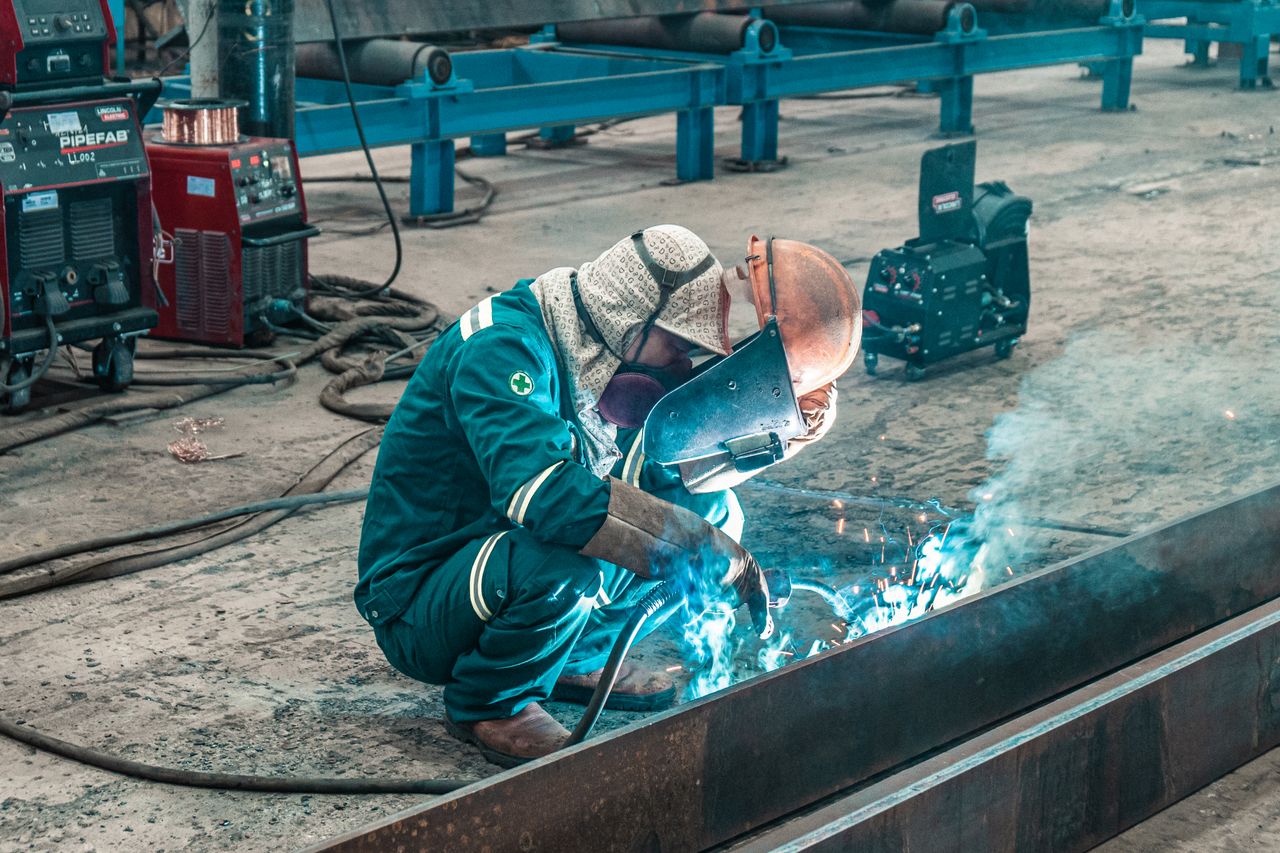
Trade and skilled labor interviews operate on different principles than white-collar hiring. The hiring manager typically isn’t evaluating whether you can tell a compelling story — they’re evaluating whether you can actually do the job and whether you’re reliable. The things you bring need to answer those questions directly.
Your Certifications, Cards, and Licenses — Physical Copies
“Bring a copy of any certifications you have, even if they are basic — OSHA 10, a forklift ticket, a CPR card.” This is the most direct advice from The Blue Collar Recruiter, and it’s the first thing on every trade employer’s mental checklist.
For electricians: your journeyman or master license card. For plumbers: your state plumber license. For welders: your AWS certification card and any specific process certifications (6G pipe, structural, pressure vessel). For HVAC technicians: your EPA 608 certification card. For CDL drivers: your commercial driver’s license. For construction workers: your OSHA 10 or OSHA 30 card, any equipment operator certifications.
The card matters more than listing it on your resume because it answers the verification question on the spot. A hiring manager who would otherwise have to call the licensing board to confirm your credential can confirm it in 30 seconds by looking at the card in their hand.
A Skills-Specific Reference Who Can Be Called Today
A reference list for a trade interview should include at least one person the interviewer can call immediately and who will answer. Not just a past employer whose HR department will only confirm dates of employment — an actual supervisor, foreman, or crew leader who can describe what you did and how you did it. Many trade hiring decisions happen fast, and the candidate whose reference picks up the phone first often has an advantage.
Photos or Video of Your Work
This is the blue-collar equivalent of a portfolio, and it’s genuinely underused. A welder who brings five photos of completed welds — including close-ups showing penetration and profile — has answered the “how good are you?” question before it’s asked. A tile installer who shows photos of a completed bathroom floor, a carpenter who shows a built-in bookcase, a painter who shows a crisp edge on crown molding — all of these translate the abstract claim of skill into visible evidence.
Keep these on your phone and offer to show them naturally in the conversation: “I have some photos of recent jobs if it would be helpful to see.” Most trade interviewers will say yes immediately.
Documentation of Your Safety Record
Trade employers care about safety beyond any other single factor. Bringing documentation of a clean safety record — zero incidents over X years, OSHA certifications current, any training records from previous employers — directly addresses the biggest concern trade employers have when hiring someone new. If your previous employer would provide a letter confirming your safety record, that document is worth more in a trade interview than almost anything else you could bring.
Your Own Tools (If Appropriate)
For some trade interviews — particularly smaller contractors and specialized shops — showing up to a working interview or skills test with your own tools is a signal. A mechanic who arrives with their personal diagnostic tablet, a carpenter who has their own tape and square, a welder who asks if they can see the welding equipment before committing — these moves signal someone who takes their craft seriously.
This doesn’t mean showing up to a first interview with a full toolbox. It means having the item that proves you’ve already invested in your own professional development, ready to mention or show if it’s relevant.
Things Most Articles Miss
A business card. In an era when everyone assumes digital contact exchange, a physical business card from someone interviewing for a role they don’t yet have is rare enough to be memorable. Print simple, professional cards with your name, email, phone, and LinkedIn. Hand one to each person you meet. They’ll have your contact information independent of whether they remember to save your phone number.
A copy of your LinkedIn URL as a QR code on your resume. A small addition that lets an interviewer scan directly to your profile on the spot. According to Yume’s 2026 research, 80% of hiring teams consider a personal website or portfolio important when evaluating candidates. The QR code is the frictionless bridge from paper to digital.
Mints, not gum. Breath matters. Gum does not.
A photo ID and your Social Security card if you’re starting immediately. For jobs where you might be asked to complete I-9 paperwork that day — trade jobs, retail, hospitality — having both documents means you can start sooner than other candidates who’d have to come back.
What to Leave at Home
Anything that needs to be plugged in unless asked. An unsolicited laptop presentation reads as presumptuous in most interview contexts unless you’ve been told to prepare one.
More than one bag. Don’t drag in a big purse along with an even bigger computer bag. Select one simple bag that can neatly hold all your items. Clutter is a signal, and not a good one.
Your phone visible on the table. Put it in your bag on silent. The impulse to check it during a pause is something to remove from the equation entirely.
Negative documentation. Don’t bring previous performance reviews, old letters of feedback, or anything related to disputes with former employers. Even if you intend to show your side of a complicated situation, the interview is not the right context.
The Real Advantage
The research is consistent: applications and interviews that arrive with context, human connection, and tangible proof of skills are far more likely to result in offers. Most candidates arrive with a resume and the intention to answer questions well. The ones who stand out arrive with something the interviewer can see, hold, and take into the hiring conversation after you leave.
What you bring to the room is your first chance to show how you prepare for things. Make it count.
Before accepting any offer, research the company at WiseWorq to understand what current employees say about how the team operates, how management treats people, and whether the role you’ve been described matches the reality of the job. Going in prepared isn’t just about impressing them — it’s about making sure you actually want what you’re walking into.
Related WiseWorq Guides
- 50 Unique Interview Questions to Ask an Employer (2026) — what to write in that notebook once you sit down
- 40 Best Questions to Ask at the End of an Interview (2026) — the questions that reveal what a company is really like
- How Long After an Interview Should You Follow Up? — what to do once you’ve left the room
- Signs You Will Get the Job After Interview — reading the signals from the conversation
- Software Engineer Cover Letter — getting the application right before you ever walk in the room