“Do you have any questions for us?”
Almost every interview ends with this moment. Most candidates either freeze, reach for something generic, or worse — say “No, I think you’ve covered everything.”
That’s a missed opportunity on two fronts. It signals low engagement to the interviewer. And it leaves you walking out the door without answers to questions that could determine whether the next two years of your career are something you look back on with pride — or regret.
This guide gives you 40 of the best questions to ask at the end of an interview, organized by what you’re trying to learn. We’ll also cover which questions to avoid, how many to ask, and what the answers should tell you.
Why the End of the Interview Is More Important Than Most People Realize
By the time you reach the “any questions?” moment, the interview dynamic shifts. You’ve been responding, defending, explaining. Now it’s your turn to lead.
The questions you ask signal three things simultaneously:
- Preparation — You’ve thought carefully about the role and the company, not just your own pitch.
- Priority — What you ask reveals what you care about, which is often more revealing than any answer you gave.
- Discernment — Strong candidates evaluate employers. They don’t just hope to be chosen.
The answers you get from the interviewer can also tell you whether you really want to work there or not. That’s the part most candidates forget. This isn’t just performance — it’s your best chance to make an informed decision before accepting an offer.
Before your interview, it’s also worth doing your homework on the company. Check their WiseWorq profile to read honest, unfiltered feedback from real employees — the kind of insight no interviewer will volunteer. And while you’re preparing your questions, make sure you’ve also worked through the questions they’ll ask you.
How Many Questions Should You Ask?

Aim for three to five questions per interviewer. Fewer than three can read as disengaged. More than six risks running over time or feeling like an interrogation.
If you’re in a panel interview with multiple people, you can direct different questions to different people based on their roles. The hiring manager gets management and team questions. A future colleague gets day-to-day culture questions. A senior leader gets strategic and growth questions.
Prioritize. You won’t get to everything on this list — and you shouldn’t try to. The goal is to leave with a clear picture of the role, the team, and whether this company is somewhere you can genuinely thrive.
Questions About the Role Itself
These are the most essential questions — especially if the job description left anything vague, which most do.
1. What does success look like in this role at 30, 60, and 90 days? This is the single most useful question you can ask. It tells you how clearly expectations are defined, whether leadership is aligned on priorities, and what you’d actually be measured against in your first quarter.
2. What are the most important things this person needs to accomplish in their first year? Separate from day-to-day responsibilities, this reveals what the real mandate is — and whether it’s realistic.
3. What does a typical week look like for someone in this position? You want the honest version: how time is actually spent, not the aspirational version from the job description.
4. Is this a backfill or a newly created role? If it’s a backfill, follow up: What happened to the person who was in this role before? Vagueness here is a yellow flag.
5. What are the most challenging aspects of this role? Asking what a recruiter expects from the person in the role gives you a clear idea of your potential responsibilities beyond the job description. The harder follow-up — “what’s the toughest part?” — reveals even more.
6. How has this role evolved over the last year or two? Roles that have changed significantly can signal either positive growth or organizational instability. The direction of the change tells you which.
7. What tools, systems, or resources does this role depend on most? Outdated tools, understaffed support teams, and broken processes are common sources of friction that no one warns you about in advance.
Questions About the Team

You’ll spend more hours with your immediate team than with almost anyone else in your life. These questions help you understand who they are and how they work.
8. Can you describe the team I’d be joining — size, background, how long people have been here? Tenure is a useful proxy. A team where most people have been around for three or more years suggests stability and engagement. A team with high turnover is worth probing further.
9. How does the team typically handle disagreement on a project? Well-functioning teams have a real answer to this — a process, a norm, an example. Teams without a good answer often have unresolved tension.
10. What’s something this team does really well together? Positive and specific. You’re listening for whether they can articulate a genuine strength — not a generic “we work hard and support each other.”
11. How has the team changed in the last year? This opens the door to turnover conversations without asking directly. If three people have left in twelve months, that’s material information.
12. What does onboarding look like for someone joining this team? Structured onboarding signals a team that values your time and invests in your success. “You’ll figure it out as you go” is a preview of how support works in general.
13. How does this team collaborate with other departments? Cross-functional friction is one of the most common and least discussed sources of daily frustration at work. Ask before it’s your problem.
Questions About the Manager
Your direct manager will shape your day-to-day experience more than almost any other factor. These questions help you understand who you’d actually be working for.
14. How would you describe your management style? The best managers describe behaviors, not values. “I do weekly one-on-ones and give direct feedback in real time” is more useful than “I’m very supportive.”
15. How do you prefer to give feedback, and how often? You want regular, structured feedback — not a once-a-year review that catches you off guard.
16. What’s your approach when a team member disagrees with your direction? You’re listening for openness, not compliance. Managers who can describe a time they changed their mind based on a team member’s input are the ones who build trust.
17. How do you like to stay informed about what your team is working on? This tells you whether you’re walking into a micromanaged environment or an autonomous one — and whether either aligns with how you work best.
18. What do you think makes someone on your team really successful? You’ll learn what the manager actually values — which is often different from what the job description emphasizes.
Questions About Growth and Career Development
Asking the right questions at the end of an interview lets you assess whether the job fits your career goals. Don’t skip this category.
19. What does the career path typically look like for someone starting in this role? You want specifics — promoted from X to Y, within approximately this timeframe, based on these criteria. “Lots of room to grow” without structure is not an answer.
20. Can you give me an example of someone who started in a similar role and advanced? Real examples are the most credible signal that advancement is actually possible. No examples should give you pause.
21. What learning and development resources does the company offer? Conferences, certifications, mentorship programs, education reimbursement — find out if the company invests in people’s growth, or just benefits from it.
22. How are performance reviews structured, and how do they connect to compensation? Knowing what you’ll be evaluated on — and whether performance actually affects pay — is important information before you join.
23. Does the company tend to promote from within or hire externally for senior roles? If leadership positions consistently go to outside hires, the internal ceiling is lower than the culture pitch suggests.
Questions About Company Culture
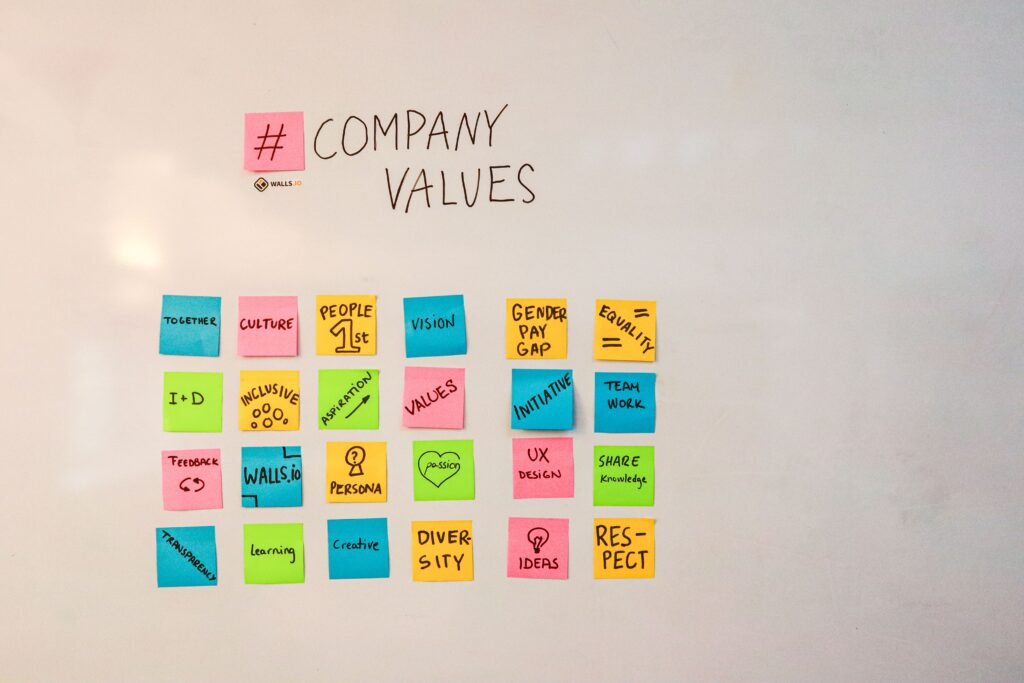
Culture is the hardest thing to assess from the outside, and the most important thing to get right.
24. How has the company culture changed in the last couple of years? Organizations evolve. Leadership changes, growth spurts, layoffs, and remote work transitions all leave marks on culture. How they describe those changes tells you a lot about their self-awareness.
25. What kind of employee tends to thrive here? And the harder follow-up: What kind of employee tends to struggle? The second question often produces more useful information than the first.
26. How does leadership typically communicate during uncertain or difficult periods? Transparency during hard times is a defining trait of trustworthy organizations. Companies that hide bad news until it’s unavoidable tend to create anxiety and erode trust.
27. What’s something the company has tried recently that didn’t work out as planned? Every organization worth joining has experimented and failed at something. Willingness to acknowledge that is a sign of maturity and honesty.
28. How would you describe the work-life balance on this team? Follow up with: What does after-hours availability look like in practice? You want specifics, not reassurances.
Before you accept any offer, do your research. WiseWorq aggregates real, unfiltered employee reviews so you can read what it’s actually like to work at a company — not just the version they present during interviews.
Questions About the Company’s Direction
Especially if you’re leaving a stable role to join somewhere new, you need to know what you’re walking into.
29. What’s the biggest challenge facing the company right now? Candid answers here are a green flag. A company that can only talk about momentum and wins — and has no honest answer to this — is either hiding something or not thinking clearly.
30. How has the company’s strategy shifted recently, and what’s driving those changes? Strategic pivots aren’t inherently bad, but understanding the direction tells you whether you’re joining a company moving forward or one that’s reactive and unsettled.
31. What does the competitive landscape look like, and how does leadership think about differentiation? Leaders who can answer this with clarity and specificity are running a company that knows where it’s going. Vague or defensive answers are worth noting.
32. Are there any significant organizational changes planned in the next six to twelve months? Restructuring, leadership transitions, acquisitions, or layoffs already in the pipeline can directly affect the role you’re being hired into.
Questions to Ask a Senior Leader (Final Rounds)

When you’re speaking to executives or senior stakeholders, adjust your questions accordingly. Think bigger.
33. What’s your vision for this team or function over the next three years? You want to understand whether leadership has a clear roadmap or is operating purely in the short term.
34. What keeps you here? Personal and disarming. Senior leaders who can answer this honestly give you a real window into what the company rewards. Those who give a rehearsed response are also telling you something.
35. If you could change one thing about how this company operates, what would it be? Leaders who can answer this honestly tend to be the kind of leaders who attract strong talent and build good cultures.
36. How does the company define and measure success at the organizational level? This separates companies that are genuinely metrics-driven from those that use data as a storytelling tool after the fact.
Questions About Next Steps
Always end with at least one logistical question. It demonstrates initiative and keeps you informed.
37. What are the next steps in the process, and what’s your expected timeline? Simple, professional, and gives you information you need to manage your own job search. Use this answer to time your follow-up — our guide on how to follow up after an interview covers exactly what to say and when.
38. Is there anything I said today that gave you pause about my fit for this role? Bold, but effective. It gives you a chance to address concerns in real time — and signals a level of confidence and self-awareness that interviewers notice.
39. What does the decision-making process look like from here — who’s involved? Useful for understanding whether you’ll be waiting on one person or a committee, and whether a second round is likely.
40. Is there anything else I can provide to help with your decision? A clean, gracious close that puts the ball back in their court and leaves a professional final impression.
Questions to Avoid
A few questions will hurt more than help at the end of an interview:
“What does your company do?” — You should already know. Asking this signals you didn’t prepare.
“What’s the salary?” — Save this for after you have an offer, or when the recruiter raises it. Bringing it up prematurely shifts the energy of the conversation.
“How soon could I be promoted?” — Well-intentioned, but it can read as impatient before you’ve even started. Reframe it as a question about career paths instead (see question 19 above).
“Do you do background checks?” — Unless you have a specific reason to need this information, it raises unnecessary questions.
“How much vacation time do I get?” — Compensation and benefits questions belong after an offer, not before one.
What Honest Answers Look Like (and What Should Give You Pause)
Asking good questions is only half the equation. Knowing what a quality answer looks like — and what to watch for — is just as important.
Green flags:
- Specific examples rather than abstract values (“We have bi-weekly one-on-ones” not “We really value communication”)
- Honest acknowledgment of challenges, not just strengths
- Alignment between what different interviewers tell you
- A manager who can describe what a team member taught them something recently
Yellow and red flags:
- Vagueness where specifics should exist — especially around expectations, advancement, or turnover
- Defensiveness when you ask about someone leaving the role or the team
- The phrase “we’re like a family” — associated so consistently with overwork and poor boundaries that it has become a widely recognized signal to investigate further
- Contradictions between what the recruiter said and what the hiring manager says — a sign of internal misalignment
- An interviewer who seems surprised or uncomfortable when you ask about challenges — healthy organizations can talk about their problems
The best resource you have beyond the interview room is other people who’ve worked there. WiseWorq’s company profiles give you access to real employee experiences — unfiltered, with both the upsides and the downsides visible — so you’re not making a major career decision based on a 45-minute conversation.
A Final Word: You’re Evaluating Them Too
The interview process is designed to feel one-directional. You prepare, you perform, you wait to be judged. But that framing does you a disservice.
The “any questions for us?” moment is a genuine invitation — and your best tool for making a decision you won’t regret. Use it.
The candidates who get the best outcomes aren’t just the ones who answered every question well. They’re the ones who walked in knowing what they were looking for, asked the questions that mattered, paid attention to the answers, and made an informed choice about where they’d invest the next chapter of their careers. Whether that ends in accepting an offer with confidence or declining gracefully, you’ll be making the right call for the right reasons.
Explore WiseWorq before your next interview to research companies, read honest employee insights, and go in prepared.
Related WiseWorq Guides
- 50 Unique Interview Questions to Ask an Employer (2026) — go deeper with bolder, more specific questions that cut through rehearsed answers
- Job Interview Questions: Get the Job in 2026 — prepare for the questions they’ll ask you, not just the ones you’ll ask them
- Signs You Will Get the Job After Interview — how to read the signals after the conversation ends
- How to Follow Up After an Interview (Step-by-Step Guide for 2026) — exactly what to say, and when, after the interview wraps
- How to Accept a Job Offer (Step-by-Step Guide for 2026) — once you’ve done your research and you’re ready to say yes
- How to Decline a Job Offer: A Complete Guide with Examples — if the interview reveals it’s not the right fit, here’s how to say no gracefully
- Exit Interview Questions: What Employers Ask and How to Answer Professionally — for when you’re navigating a departure from your current role