
“Is oil and gas production a good career path?” doesn’t have one answer, because oil and gas isn’t one career. It’s two genuinely different worlds that happen to share an industry: a blue-collar path that gets you earning real money within months and requires no degree, and a white-collar engineering path that requires four to six years of school, real tuition costs, and a very different day-to-day life once you’re in.
This guide breaks both down honestly — what you actually need to invest in time and money, what you can expect to earn at each stage, the real risks the recruiting brochures don’t lead with, and how hiring actually works for each path. The goal is a clear answer to “is it worth it,” not a generic yes.
The Blue-Collar Path: Entry-Level Field Work

What It Actually Costs to Get In
This is the path’s biggest selling point: you can start earning without a degree, and the upfront cost is measured in hundreds of dollars, not tens of thousands.
For onshore roustabout, floorhand, and roughneck roles, most companies require only a high school diploma or equivalent and provide on-the-job training. The certifications that genuinely improve your hire odds — H2S Safety, a general safety orientation like RigPass or SafeLand — each run $150–$400 and take a single day to complete. A short 4–8 week regional oilfield academy that bundles several of these credentials together is a common, low-cost path in, and some community colleges and workforce programs offer tuition support for exactly this.
Offshore work raises the entry bar slightly. You’ll need BOSIET (Basic Offshore Safety Induction and Emergency Training), which runs $900–$1,800 for the 3-day course, plus a medical clearance. A full entry-level offshore certification package — BOSIET, H2S, and first aid combined — typically costs $1,500–$2,500 total.
Compare that to a four-year degree, and the math is stark: for roughly the price of one semester of out-of-state tuition anywhere else, you can be certified and working in oil and gas within weeks.
What It Pays
Entry-level field roles vary widely by specific job and location, but BLS-sourced data gives a real range: roustabouts and construction laborers on-site start around $37,500 a year, rotary drill operators average around $56,400, and truck drivers hauling for the industry average $48,300. Many roles also pay around $25 an hour from day one once you’re trained and on a crew — well above federal minimum wage, and often with overtime or rotational pay premiums layered on top for offshore or remote postings.
Skilled trades within the industry — welders, diesel mechanics, electricians — typically out-earn general laborers, and a welding certification (often a few hundred to low thousands of dollars) can meaningfully increase your ceiling without requiring a four-year degree at all.
What the Job Is Actually Like
This is where the recruiting pitch and the lived reality diverge most. Field roles often run on rotation — commonly two or three weeks on-site followed by a week or more off, particularly offshore. That schedule is genuinely appealing to some people and genuinely brutal to others, depending on family situation and personality. Engineers and supervisors may visit sites occasionally but mostly work a regular office schedule, while field workers are often out at the well for weeks at a stretch — a meaningful lifestyle difference between the white-collar and blue-collar version of “working in oil and gas.”
The physical demands are real: weather exposure, heavy equipment, and long shifts. Safety has genuinely improved — incidents have dropped 41% over a decade, with only 1.7 injuries per 100 workers as of recent data — but it remains a physically demanding, safety-critical environment, not an office job with a hard hat.
The White-Collar Path: Engineering and Technical Roles

What It Actually Costs to Get Into Oil and Gas Careers?
This is where the investment becomes serious, and where the “is it worth it” question gets genuinely complicated.
Petroleum engineering tuition varies enormously by school. At the cheap end, in-state public tuition averages around $8,175–$11,360 a year, with schools like the University of Wyoming costing as little as $4,892–$5,581 a year in state tuition. At the expensive end, out-of-state and private tuition can run $37,000–$47,000 a year — meaning the same four-year degree can cost anywhere from roughly $20,000 to well over $150,000 depending entirely on where you go and your residency status.
That spread matters enormously for ROI, because the starting salaries don’t spread nearly as wide. Graduates from lower-cost programs like the University of Wyoming and Texas Tech start in a similar range to graduates from significantly pricier private programs — which means, financially, the cheaper in-state public school is very often the smarter buy for this specific degree.
What It Pays
Petroleum engineering has one of the strongest starting salaries of any undergraduate degree in the country. Recent data puts the starting median around $100,750, with graduates from top programs like UT Austin and Texas A&M starting closer to $110,000–$112,000. By mid-career, petroleum engineering graduates average around $183,520 a year, and petroleum engineers in Texas specifically have a median of $164,860, helped along by the state’s lack of income tax.
Geoscientists in oil and gas can earn even more at the senior level — some data puts the average as high as $241,000 — though that role typically requires a graduate degree and years of specialized field experience to reach.
The Real ROI Math
Here’s the honest version: if you attend an in-state public program for roughly $8,000–$11,000 a year — about $35,000–$45,000 total for four years — against a starting salary of $100,000+, you can realistically pay off the degree’s direct cost within the first year or two of working, even accounting for living expenses and loan interest. That’s an exceptional ROI compared to most bachelor’s degrees.
If you attend an expensive out-of-state or private program costing $150,000+ total, the math gets considerably less favorable — you’re not earning meaningfully more for that cost, just paying significantly more for a similar starting outcome. For this specific degree, where you go matters more than how prestigious the name sounds, because the salary ceiling doesn’t move nearly as much as the tuition bill does.
What the Job Is Actually Like
Engineering and technical roles mean a more conventional office schedule, periodic site visits rather than weeks-long field rotations, and significantly more job security at the individual level — though not immunity from industry-wide layoff cycles (more on that below). The trade-off is the years of schooling and the debt risk if you choose an expensive program without thinking through the ROI first.
The Risk Every Path in This Industry Shares: Boom and Bust

This is the part most “is it a good career path” articles understate, and it applies to roughnecks and petroleum engineers alike.
Oil and gas is a deeply cyclical industry tied to global commodity prices, and that cyclicality drives real, recurring layoff waves — not occasional belt-tightening, but periodic, sector-wide contractions. One industry veteran summarized the underlying mechanism plainly in a public forum: oil companies fund future exploration and development from the profits of currently producing fields, and when oil prices drop, that funding dries up — leading directly to layoffs across the value chain, from the oil companies themselves down to the service companies like Halliburton, Schlumberger, and Baker Hughes that support them.
The same discussion thread offered a piece of advice worth taking seriously regardless of which path you choose: if you’re committing to an industry that regularly experiences boom-bust layoff cycles, you’re taking on real risk of being out of work at some point in your career — and the people who navigate that best are the ones who keep building transferable skills (project management, safety and compliance expertise, data analysis, technical problem-solving) rather than skills that only make sense inside this one industry.
That’s not a reason to avoid the field. It’s a reason to go in with a financial buffer, a transferable skill set, and realistic expectations about job security tracking the price of oil more than your individual performance.
How does Hiring Actually Works?
Blue-collar roles are typically hired directly by operators or, more often, by oilfield service companies (Halliburton, Schlumberger/SLB, Baker Hughes, Patterson-UTI, and similar). The process is usually fast relative to white-collar hiring: an application, a basic skills and safety knowledge check, a background check, a physical or medical clearance, and for offshore roles specifically, proof of your BOSIET and H2S certifications before you’re scheduled for your first rotation. Companies are generally eager to hire people who’ve already completed basic safety training, since it reduces their own onboarding cost and risk.
White-collar engineering and technical roles hire much like any corporate engineering job: campus recruiting at target schools (Texas A&M, UT Austin, Colorado School of Mines, and similar programs are heavily recruited), a resume and GPA screen, technical interviews, and often an internship or co-op completed during school that converts into a full-time offer. Internships matter more in this field than in many others — they’re frequently the actual hiring pipeline, not just resume padding.
What are the Benefits Worth Weighing in Oil and Gas Careers?
Pay above the national average at almost every level. Even entry-level field roles routinely out-earn comparable entry-level work in retail, hospitality, or general labor.
Transferable skills. Project management, safety compliance, technical troubleshooting, and crew leadership all translate to construction, manufacturing, and logistics if you eventually want or need to leave the industry.
Genuine demand. Studies have projected meaningful job growth in oil and gas through the mid-2030s even as the broader energy mix shifts, because global demand for oil and gas isn’t disappearing as quickly as the renewable energy conversation sometimes implies.
A fast, low-cost entry point on the blue-collar side. Few other paths to a $50,000+ starting income require so little upfront educational investment.
What are the Risks Worth Weighing in? 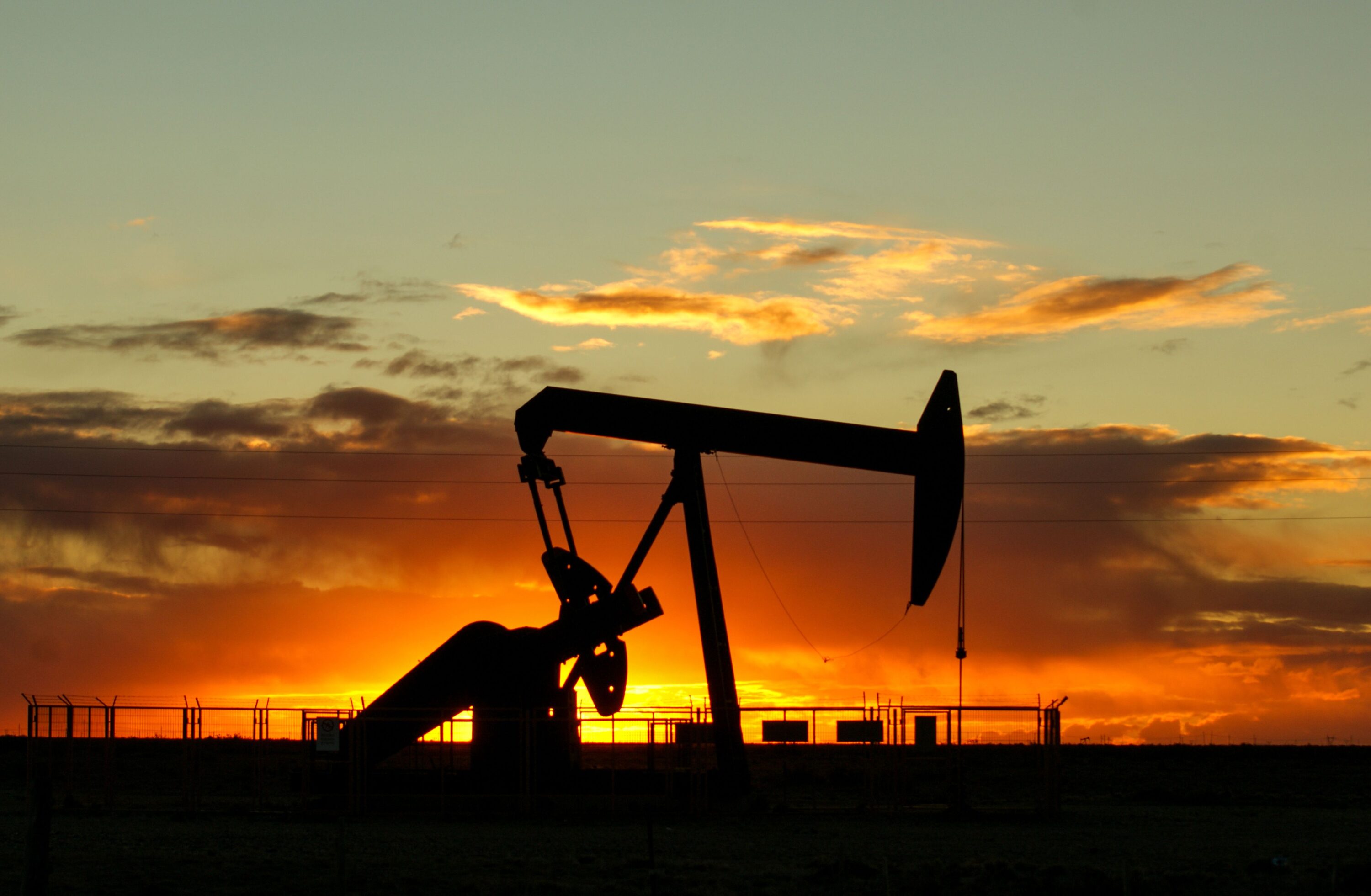
Cyclical layoffs tied to commodity prices, as detailed above — this is the single biggest risk across the entire industry, and it’s structural, not a reflection of any individual worker’s performance.
Environmental and reputational considerations. If you have strong personal feelings about fossil fuel extraction’s environmental impact, that internal tension is worth being honest with yourself about before committing years to the field.
Lifestyle demands on the field side — rotational schedules, time away from family, physically demanding and occasionally hazardous conditions, even with the real safety improvements of the past decade.
Geographic concentration. Many of the best-paying roles cluster in specific regions — Texas, Oklahoma, North Dakota, the Gulf Coast — which may mean relocating away from where you’d otherwise choose to live.
So, Is It Worth It?
If you’re choosing the blue-collar path: yes, for most people, the math is straightforward. The upfront cost is low, the pay is genuinely good relative to the investment, and the transferable skills give you a real exit ramp if the industry contracts. The honest trade-off is the schedule and physical demands, not the financial return.
If you’re choosing the white-collar engineering path: yes, with one major caveat — choose your school based on cost relative to the (fairly consistent) starting salary, not on prestige alone. An in-state public program is very often the financially smarter choice for this specific degree, because the salary ceiling doesn’t move enough to justify a six-figure tuition bill at a pricier school.
Either way, go in understanding that this is a cyclical industry, build savings and transferable skills as you go, and treat “good pay” and “guaranteed lifetime job security” as two separate questions — because in oil and gas, they’re not the same thing.
Before accepting any offer — field or office — research the specific employer at WiseWorq to see how current and former employees describe pay accuracy, rotation schedules, and how the company actually handled its last industry downturn.
Related WiseWorq Guides
- What Do Energy Jobs Pay? (2026 Guide) — how oil and gas compares to renewables and utilities
- Best Paying Jobs in Consumer Services (2026) — salary comparisons across other in-demand sectors
- Signs of a Toxic Workplace — what to watch for in any high-pressure field or technical role
- 50 Unique Interview Questions to Ask an Employer (2026) — ask about layoff history and rotation schedules before accepting
- How to Accept a Job Offer (Step-by-Step Guide for 2026) — once you’ve weighed the cost, pay, and risk above