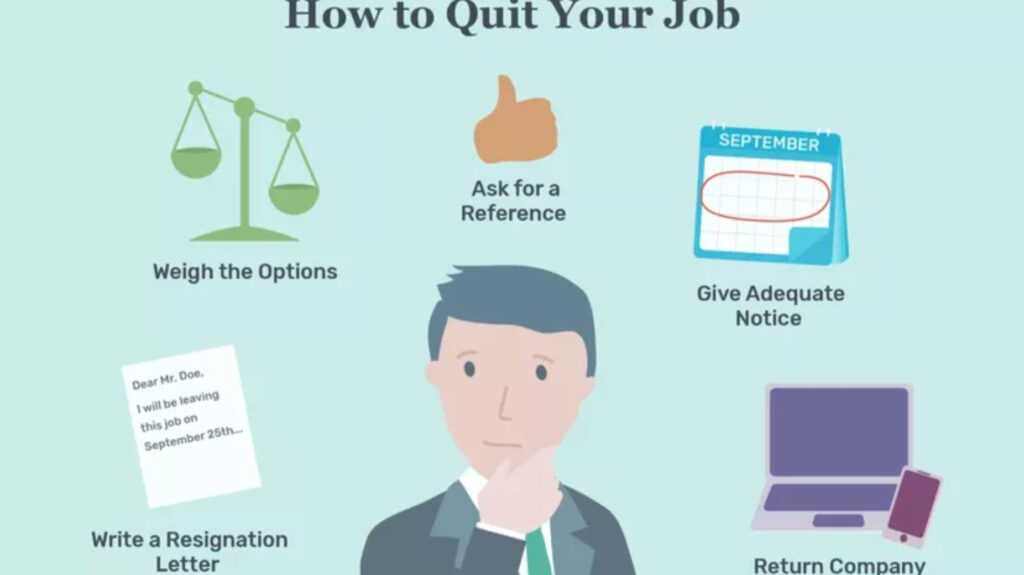
So you’ve decided it’s time to go. Maybe you’ve got a shiny new offer, maybe you’re just done — either way, congrats. Quitting a job is one of the more nerve-wracking things in working life, and almost nobody teaches you how to do it properly.
Here’s the good news: it’s genuinely not that hard once you know the steps. And here’s the part most cheerful “how to quit” articles skip entirely — there’s real money and real legal stuff on the line. When your final paycheck lands, whether you get paid out for unused vacation, whether you can take that holiday you’d booked, and what happens if you just stop showing up — these all have actual rules behind them, and knowing them can be worth thousands of dollars.
This is the friendly, no-nonsense version. Let’s get you out the door the smart way.
First: Are You Sure? (A Quick Gut Check)
Not to talk you out of it — just a 30-second sanity check before you pull the trigger:
- Do you have your next thing lined up, or a financial cushion? Three to six months of expenses is the classic safety net. Quitting into nothing is sometimes the right call, but do it on purpose, not on impulse.
- Is this a “the job is broken” problem or a “this one thing is broken” problem? Sometimes a role is fixable with a different manager or team. Sometimes it really is time to go. Be honest about which one you’re facing.
- Are you quitting toward something or just away from something? Both are valid, but knowing which helps you choose your next move well.
If you’ve thought it through — great. Let’s do this properly.
The Golden Rule: Don’t Burn the Bridge
Here’s the single most important mindset for quitting well: the world is small and your reputation follows you.
That manager you’d love to tell exactly what you think of them? They might pop up at your next company in three years. That colleague you’re tempted to ghost? They could be the reference that lands you a future role. References, LinkedIn, industry gossip — it all outlasts the momentary satisfaction of a dramatic exit.
You can be completely done with a place and still leave with grace. That’s not being fake — it’s being smart. Save the honest version for your close friends over drinks, not for your resignation meeting.
Step-by-Step: How to Actually Quit your Job?

Step 1: Tell Your Manager First — In Person or on a Call
Before the email, before you tell colleagues, before you post anything anywhere: tell your direct manager. They should hear it from you, not through the grapevine. A short, private conversation (or video call if you’re remote) is the respectful move.
Keep it simple and warm: “I wanted to let you know I’ve decided to move on, and my last day will be [date]. I’ve really valued my time here and I want to make the handover as smooth as possible.”
You do not owe them a detailed explanation of why. “I’ve found a new opportunity” or “it’s time for a new challenge” is a complete answer. Don’t get talked into a trauma-dump about everything that’s wrong.
Step 2: Follow Up With a Short Written Resignation
After the conversation, put it in writing — a brief, friendly email or letter. This isn’t about drama; it’s your paper trail, and it starts the clock on notice periods and final-pay deadlines (more on those below).
Keep it to three lines: that you’re resigning, your last day, and a thank-you. That’s it. No essay, no grievances. If you want to protect your PTO payout in certain states, this written notice with a clear last day matters — we’ll come back to that.
Step 3: Give Notice (Usually Two Weeks)
Two weeks is the standard courtesy in the US. More on the legal reality of this below — but as a norm, two weeks gives your employer time to plan and keeps you in good standing. Senior roles sometimes warrant more (three to four weeks); that’s a judgment call.
Step 4: Offer to Help With the Handover
This is the move that makes people remember you fondly. Offer to document your work, train whoever’s covering, and tie up loose ends. You don’t have to move mountains — just don’t leave a smoking crater. A tidy handover is what turns “they quit” into “they left like a pro.”
Step 5: Tell Colleagues (After Your Manager Knows)
Once your manager’s in the loop, you can let your team know — warmly and without oversharing. Keep the tone positive even if you’re privately thrilled to escape. You never know who you’ll work with again.
Step 6: Ace the Last Two Weeks
Don’t check out mentally the moment you resign. Coasting for two weeks is how good impressions unravel at the finish line. Stay professional, finish strong, and leave people wishing you’d stayed. That’s the reputation you want trailing behind you.
The Money & Legal Stuff Nobody Explains
Okay, here’s the part that’s actually worth real money — and where most “how to quit” guides go quiet. Quick heads-up: these rules vary by state, so treat this as your map, not legal advice. Always check your state’s labor department and your own employee handbook.
Is Two Weeks’ Notice Actually Required by Law?
No. This surprises people. In almost every US state, employment is “at-will,” which means two weeks’ notice is a professional courtesy, not a legal requirement. You can legally walk out today. Should you? Usually not — but legally, you can.
The catch: while the law doesn’t require notice, your company’s policy might tie your benefits to it. Which brings us to the big one.
Your Final Paycheck: When Do You Actually Get Paid?
You’re owed every dollar for hours you’ve actually worked — that’s federal law, no exceptions. The question is when, and that depends entirely on your state.
Final paycheck timing splits into a few buckets: some states require payment immediately or within a few days, others say by your next regular payday. Here’s the key quirk — in many states, if you quit you’re paid by the next payday, but if you’re fired you must be paid sooner (sometimes same-day).
California is the clearest example: if you give at least 72 hours’ notice before quitting, your final paycheck — including unused vacation — is due on your last day. Quit with no notice, and they have 72 hours to pay you. That’s a real incentive to give notice.
Do You Get Paid for Unused Vacation / PTO?
This is where the real money often hides, and the answer is: it depends on your state and your company’s policy.
- Roughly 24 states require employers to pay out accrued, unused vacation when you leave — they treat it as earned wages you’re owed. In states like California, accrued vacation is your money, “use-it-or-lose-it” policies are banned, and it must be paid out no matter how you leave.
- In other states, there’s no automatic right — you get a payout only if your company’s written policy promises one.
Here’s the trap that can cost you thousands: in states without a mandatory-payout law, some company policies say you only get your PTO payout if you give proper notice. Quit without your two weeks, and you could forfeit the entire balance. So before you dramatically storm out, check your handbook — that walkout could literally cost you your unused vacation.
Sick leave is different: most states don’t require payout of unused sick days unless your policy says so. Vacation and sick time are treated separately.
Can You Take a Holiday After Handing in Your Notice?
Sort of — but don’t assume. There’s no federal right to use PTO during your notice period, and your employer can deny a vacation request during those final two weeks if their policy allows.
Often the smarter play is to let it be paid out rather than trying to take it as time off at the end — especially in a state where payout is guaranteed. If you’d rather take the days than get the cash, ask early and get the approval in writing. Don’t book flights on the assumption it’ll be fine.
What If You Just… Leave? (Ghosting / No Notice)
Legally, in an at-will state, you can just stop showing up. But here’s what actually happens:
- You’ll likely burn the bridge permanently. No rehire, no reference, and a story that follows you in your industry.
- You may forfeit your PTO payout if your company’s policy requires notice to receive it (see above).
- Your final-pay timing may change, and in some states quitting without notice pushes your payout later.
- If you’re under contract (not at-will), leaving abruptly could have actual legal consequences — some contracts specify notice periods or repayment of things like signing bonuses or training costs.
So while you can walk out, it usually costs you more than the two weeks would have. Ghosting feels great for about a day and then quietly follows you around.
Quitting During or Before Probation
If you’re still in a probationary period, quitting is usually simpler — shorter or no notice is often expected, and you’ve accrued little PTO to worry about. But check your offer letter and handbook anyway. Some probationary agreements still specify a notice period, and if your company gave you a signing bonus, relocation package, or paid training, there may be a clawback clause requiring you to repay it if you leave early. Read the fine print before you assume it’s a clean break.
Watch for Clawbacks and Contract Clauses
Speaking of which — before you resign, quickly check whether you signed anything that says you owe money back if you leave within a certain window:
- Signing bonuses often must be repaid if you leave within a year.
- Relocation and tuition/training reimbursement frequently carry repayment clauses.
- Non-competes and non-solicits may limit where you can go next (though these are increasingly restricted by law — check your state).
None of these should necessarily stop you from quitting. You just want to know about them before you hand in your notice, not after.
What About Unemployment Benefits?

Quick note: if you voluntarily quit, you generally won’t qualify for unemployment benefits — those are mostly for people who lost a job through no fault of their own. There are exceptions (quitting for “good cause,” like unsafe conditions or certain documented reasons, varies by state), but don’t count on unemployment as a cushion if you’re resigning by choice. Plan your finances accordingly.
The Resignation Conversation: A Quick Script
Nervous about the actual conversation? Here’s a friendly template you can adapt:
“Hi [Manager], thanks for making time. I wanted to let you know I’ve accepted a new opportunity and I’ll be resigning. My last day will be [date] — that’s [two weeks / whatever notice] from today. I’ve genuinely appreciated working here and learned a lot, and I want to make the transition as smooth as I can. Happy to document everything and help train whoever takes over.”
Then stop talking. Let them respond. Stay warm, stay brief, and don’t get pulled into over-explaining or a counteroffer negotiation you weren’t planning for.
On counteroffers: if they scramble to keep you with more money, be cautious. The reasons you’re leaving usually don’t disappear because of a raise, and accepting a counteroffer can flag you as a flight risk. It’s flattering, but think hard before you say yes.
Your Quick Pre-Quit Checklist
Before you hand in that notice, run through this:
- Next job or financial cushion sorted
- Read your employee handbook — notice, PTO payout, and any clawback clauses
- Checked your state’s final-paycheck and PTO-payout rules
- Decided last day and notice length
- Written resignation letter ready (short and friendly)
- Plan for a clean handover
- Saved any personal files/contacts you’re allowed to keep (nothing confidential!)
- Confirmed how you’ll get your final pay and PTO payout
Tick those boxes and you’re leaving like a pro — bridge intact, money accounted for, reputation shining.
The Bottom Line
Quitting well comes down to two things: be kind on the way out, and know your rights on the way out. Tell your manager first, give your notice, help with the handover, and finish strong — that’s the “don’t burn bridges” half. Then check your state laws and your handbook so you actually collect the final pay and PTO payout you’re owed, and don’t accidentally forfeit money by walking out — that’s the half nobody tells you about.
Do both, and you’ll leave with your dignity, your reputation, and every dollar you earned. Onward to the next thing.
Before you say yes to that next role, research the company at WiseWorq — real employee reviews will tell you whether you’re jumping to something genuinely better or just trading one set of problems for another.
Related WiseWorq Guides
- I Hate My Job: What a Big Four Firm Taught Me About Getting Out — the quiet exit strategy for when you’re planning your escape
- How to Call Out of Work — handling time off while you’re still there
- Exit Interview Questions — what to expect (and what to say) on your way out
- 50 Unique Interview Questions to Ask an Employer — vetting your next job so you don’t have to quit it too
- Signs of a Toxic Workplace — confirming it really is time to go
- Career Change at 40 — if quitting is part of a bigger pivot