If you have a felony on your record, you already know that finding work can feel like running into the same wall over and over. One in three U.S. adults has a criminal record that shows up on a routine background check, and yet so much of the job search process still treats that record as a permanent disqualification rather than something that happened in your past.
It isn’t a permanent disqualification. Not at every company, and not under the law. This guide is built to give you something practical: real employers known to hire people with felony convictions, what those jobs actually pay, what the day-to-day work looks like, and the legal protections you have during the hiring process — along with an honest look at where the road is genuinely harder, because pretending otherwise wouldn’t actually help you.
You did the time. This is about helping you find the job.
Your Legal Rights, Explained Plainly
Before the list of companies, you need to understand the actual rules — because knowing your rights changes how you walk into every interview.
Ban the Box and Fair Chance Laws
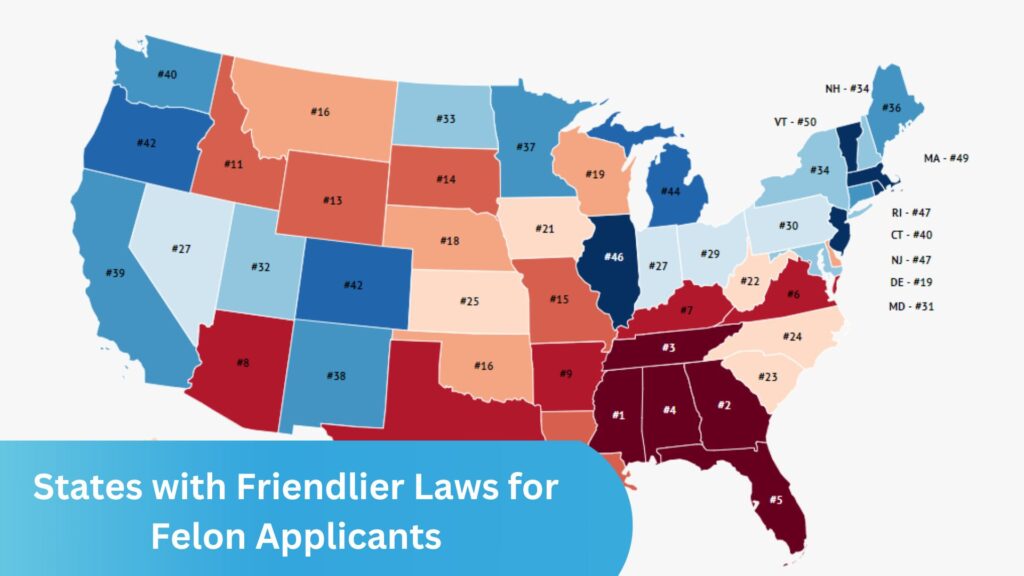
“Ban the Box” refers to laws that remove the criminal history checkbox from job applications and delay when an employer can ask about your record. As of 2026, more than 37 states, the District of Columbia, and over 150 cities and counties have adopted some version of this policy — meaning roughly four-fifths of the U.S. population lives somewhere with at least some fair chance protection in place.
These laws vary by location in exactly when an employer can ask. In Minnesota, employers generally have to wait until you’ve been selected for an interview. In Hawaii and Washington, D.C., they have to wait until after a conditional job offer has already been made. The point of all of these laws is the same: to get your skills and experience in front of an employer before your record does.
At the federal level, the Fair Chance to Compete for Jobs Act of 2019 applies specifically to federal agencies and federal contractors, prohibiting them from asking about your arrest or conviction history until after they’ve given you a conditional offer — with limited exceptions for law enforcement and national security roles.
What the EEOC Actually Requires
The U.S. Equal Employment Opportunity Commission doesn’t ban employers from considering criminal records altogether, but its guidance puts real limits on how they can use that information. An employer cannot simply disregard every applicant who has a conviction. Instead, the EEOC requires what’s called an individualized assessment — actually weighing the nature of your specific offense against the actual duties of the specific job, rather than applying a blanket rule.
This matters in practice. A bank fraud conviction is far less relevant to a warehouse job than it would be to a position handling other people’s money — and the EEOC’s framework exists specifically so that an irrelevant old conviction doesn’t end up blocking you from a job that has nothing to do with it.
Where the Law Gets More Complicated
It’s worth being honest here: not every state treats this the same way, and not every job is equally open. Texas, for example, has historically had no state law restricting when employers can ask about your criminal background — meaning you could be asked about it on the application itself, depending on the employer. Pennsylvania, by contrast, generally only allows employers to consider felony convictions or misdemeanors that are actually job-related, and prohibits the use of expunged or sealed records entirely.
One hiring manager in accounting and finance described the calculus from the employer’s side honestly on Quora: a “violation of trust” crime specifically — embezzlement, fraud, theft from a previous employer — creates a different kind of hesitation than other convictions, because the job itself requires a baseline of trust that the conviction directly undermines.
That’s a real, structural challenge, not just stigma — and it’s worth knowing going in so you can target your search toward roles where your specific history isn’t the central concern of the job itself.
The Federal Bonding Program
Here’s something a lot of job seekers don’t know about: the U.S. Department of Labor’s Federal Bonding Program, which has existed since 1966, provides a fidelity bond that protects an employer against employee theft, forgery, or larceny for the first six months of employment — at no cost to you or the employer. It exists specifically to remove one of the practical objections employers raise about hiring people with records, particularly for cash-handling or trust-sensitive roles.
There’s also the Work Opportunity Tax Credit, a federal tax incentive available to employers who hire people from certain groups, including those with felony convictions. Employers genuinely benefit financially from hiring you — which is worth remembering when you start to feel like you’re only asking for a favor.
Companies Known for Hiring Felons
These employers have either signed formal fair-chance pledges, are publicly known for case-by-case evaluation rather than blanket exclusion, or have an established track record of hiring people with felony records. Policies can and do change, so it’s worth confirming directly with a specific location before you apply — but these are a strong starting point.
Retail and Grocery
Walmart has a long-standing record of considering applicants with criminal histories for many entry-level positions, valuing long-term reliability over a clean record alone. Some corporate and cash-handling roles may carry more restrictions depending on your specific conviction, and a background check is standard — so come prepared to speak honestly about your history and what’s changed.
Target participates actively in diversity and inclusion hiring efforts that include people with criminal backgrounds, particularly for retail and warehouse positions, with training programs that support real advancement over time. Corporate and finance roles tend to be more restricted.
Kroger focuses specifically on community reintegration, offering entry-level retail, logistics, and supply chain roles with a genuinely supportive onboarding environment. Pharmacy, finance, and alcohol-handling positions carry more restrictions by the nature of state licensing requirements, not just company policy.
Costco considers applicants based on skills, reliability, and prior work history rather than excluding by record alone, and is well known for strong pay and benefits relative to other big-box retailers — Costco has ranked repeatedly on Forbes’ Best Employers lists.
Home Depot and Lowe’s both hire into warehouse, stocking, and skilled labor roles with an emphasis on practical reliability. Cash-handling positions may carry restrictions, and both companies run standard background checks as part of the process.
Food and Beverage
Starbucks has built a genuinely strong reputation in fair-chance hiring circles, with a track record of welcoming people with records into barista and store management training tracks where real advancement is possible. Corporate and finance roles remain more restricted.
McDonald’s, Domino’s Pizza, and Subway all commonly hire for crew, kitchen, delivery, and store management roles, with most restrictions concentrated specifically around cash-handling and, for delivery roles, a clean driving record. Demonstrating reliability and a strong work ethic in the interview goes a long way here.
Logistics, Warehousing, and Delivery
This sector is consistently one of the strongest for fair-chance hiring, largely because warehouse and logistics work is in chronic high demand and the skills required are teachable on the job.
UPS evaluates candidates on a case-by-case basis rather than applying a blanket ban, weighing the nature of the offense, how long ago it occurred, and how directly it relates to the specific position. Non-violent and older convictions tend to fare better, particularly for warehouse and package-handling roles; driver positions may carry more scrutiny.
FedEx actively recruits people with criminal records into warehouse and delivery roles, with restrictions concentrated around security-sensitive positions and driving roles where a clean record matters more directly.
Amazon hires into fulfillment center, warehouse, and delivery roles through a Ban the Box process, reviewing applications individually rather than excluding by record. Some safety-sensitive or regulated positions may be restricted depending on your state and specific conviction.
XPO Logistics and Grainger both offer warehouse and transportation-adjacent roles, with security-sensitive and driving positions carrying the most restriction.
Manufacturing and Skilled Trades
Cintas, Sherwin-Williams, and O’Reilly Auto Parts all hire into production, logistics, and retail roles with structured training programs, restricting mainly financial or security-sensitive positions.
Beyond these specific companies, the broader trades — construction, welding, HVAC, and solar installation — are worth serious consideration if they’re not already on your radar. Many of these fields don’t require a license for entry-level labor positions, certifications can often be completed in a matter of months rather than years, and the pay tends to be solid relative to the barrier to entry. Welding and HVAC roles frequently start in the $50,000 range, and solar installation has been one of the fastest-growing trades in the country.
What You Can Realistically Expect: Pay, Hours, and Workload

It’s worth being direct about this rather than vague. According to ZipRecruiter salary data, the average pay specifically for roles explicitly advertised as second-chance positions sits around $71,585 a year as of 2026, with most such roles falling between $46,500 and $98,500 depending on experience, location, and industry. That’s a wide range, and where you land in it depends heavily on the sector:
Warehouse and fulfillment roles (Amazon, UPS, FedEx, XPO): typically starting around $35,000–$45,000, often with overtime availability that can meaningfully increase take-home pay. Physical demands are real — expect to be on your feet, lifting, and moving for most of a shift.
Retail and food service roles (Walmart, Target, Starbucks, McDonald’s): typically starting at or near minimum wage to the high teens per hour depending on state, with advancement into shift lead or store management roles bringing meaningful pay increases over one to two years of consistent performance.
Driving roles (CDL truck driving in particular): for those with a clean driving record regardless of other history, CDL trucking frequently starts above $60,000 a year, and many carriers will overlook non-violent felony convictions if your motor vehicle record is clean.
Skilled trades (welding, HVAC, solar): often starting in the $40,000–$55,000 range even at entry level once basic certification is complete, with strong upward trajectory as experience builds.
One person navigating exactly this situation described it candidly in a public forum: needing to be home for specific hours to get a young child to the school bus limited which shifts they could even accept, on top of the felony conviction itself making employers hesitant. Their solution was practical rather than dramatic — working with temporary staffing agencies first to build recent, verifiable work history, then using that history to move toward more stable, better-fitting employment over time.
How to Actually Handle the Conversation About Your Record
The legal protections above matter, but at some point in most hiring processes, you’ll likely have a real conversation about your history. A few things consistently come up in real accounts from people who’ve successfully navigated this:
Read the actual application question carefully. If it asks specifically about felonies and your record doesn’t include one, answer honestly based on what’s actually asked — there’s no need to volunteer information beyond the specific question. If it asks about convictions within a specific timeframe and yours falls outside that window, the same logic applies. This isn’t deception; it’s answering the question that was actually asked.
Be honest once it’s relevant. Multiple sources, including career counselors at organizations like Goodwill, consistently advise the same thing: when you do need to disclose, do it briefly, take ownership of what happened, and pivot toward what you’ve done since. One widely shared example of this approach: acknowledging the conviction plainly, describing what you did afterward — sobriety, education, consistent work history — and keeping the explanation focused on growth rather than justification or excessive detail about the offense itself.
Bring a real plan for trust, not just an apology. If you’re applying for a role where trust is central to the job — and you know your record raises a legitimate concern for the employer — offering something concrete matters more than asking them to simply take your word for it. Mentioning your eligibility for the Federal Bonding Program, providing character references from supervisors or program staff who can vouch for your reliability since release, and pointing to a consistent work or education record since your conviction all give the employer something real to act on, rather than just trust they have to extend on faith alone.
Don’t let one rejection define the search. A 2026 industry analysis found that reentry programs see roughly 60% of participants employed within 30 days of consistent effort, and the same research notes that the risk of reoffending drops significantly the longer someone stays employed — meaning that persistence in this specific search is doing real, measurable work for your future, not just your immediate paycheck.
A Note on Honesty: Where This Gets Genuinely Harder
It would be dishonest of this guide to pretend every type of conviction carries the same weight in every type of job search — and we’d rather tell you the truth than waste your time.
If your conviction involves a violation of trust — embezzlement, fraud, theft from an employer — roles in finance, accounting, and cash-handling will be a steeper climb, not because employers are uniquely unforgiving in those fields, but because the job function itself requires the specific trust your conviction calls into question. This doesn’t mean those doors are closed forever, but it does mean your energy may be better spent initially in sectors — warehousing, logistics, trades, food service, manufacturing — where the job itself doesn’t center on the exact issue your record raises.
If your conviction is violent in nature, certain roles — particularly anything involving vulnerable populations like children or healthcare patients, and many security-sensitive driving or logistics roles — will likely remain restricted by law rather than just employer preference, regardless of how much time has passed or how much you’ve changed. Trade work, manufacturing, and remote-eligible roles tend to be more realistic starting points.
If your conviction is sex-offense related, your search will be the most constrained of any category here, often by registry requirements and state law rather than employer discretion alone. Manual labor, trades, and remote work tend to offer the most realistic paths forward, and working directly with a reentry program that specializes in your specific situation will likely serve you better than a general job search.
None of this is said to discourage you. It’s said because knowing where the real friction is lets you spend your limited time and energy where it will actually pay off, rather than hitting the same wall repeatedly without understanding why.
Organizations That Can Help Beyond This List
You don’t have to navigate this entirely alone. A few resources worth knowing about:
Honest Jobs operates as a national fair-chance employment platform connecting job seekers directly with over 1,400 businesses that have explicitly committed to fair-chance hiring.
The Second Chance Business Coalition works with major employers — including companies like JPMorganChase — on formal second-chance hiring and advancement programs, and publishes resources on which companies are genuinely active in this space right now.
Jails to Jobs maintains a directory of companies that have signed the federal Fair Chance Business Pledge, along with real stories from small and large employers about how they built their second-chance hiring programs.
Your local Goodwill often runs job readiness and placement programs specifically for people reentering the workforce after incarceration, including resume support and direct employer connections.
Before applying anywhere, it’s also worth checking how a specific employer is actually rated by the people working there right now. WiseWorq lets you search individual companies and read real, unfiltered reviews from current and former employees — useful for getting a sense of management quality, pay accuracy, and day-to-day culture beyond whatever a company’s official fair-chance policy states on paper.
The Bottom Line
You have more legal protection in this process than you might think, and there are more employers genuinely willing to look past your record than the job search can sometimes make it feel like. Ban the Box and fair chance laws now cover roughly four-fifths of the country in some form. The EEOC requires employers to actually weigh your specific situation rather than applying a blanket rule. Major companies — Walmart, UPS, Amazon, Starbucks, Costco, and dozens of others — have real, documented track records of hiring people with felony convictions into roles with genuine paths forward.
It will likely take longer than you want, and certain doors may stay closed longer than feels fair. But the data is consistent on one point: staying in the search, building verifiable work history even through temp or staffing agencies if needed, and being upfront rather than evasive about your past all measurably improve your odds over time.
You did the time. This is about what comes next.
Related WiseWorq Guides
- 50 Unique Interview Questions to Ask an Employer (2026) — how to evaluate any employer’s real culture before accepting
- Signs of a Toxic Workplace — what to watch for once you’ve started a new role
- Best Paying Jobs in Consumer Services (2026) — including roles in retail and logistics covered in this guide
- How to Accept a Job Offer (Step-by-Step Guide for 2026) — once you’ve found the right fit
- How to Follow Up After an Interview (Step-by-Step Guide for 2026) — staying engaged through a longer hiring process