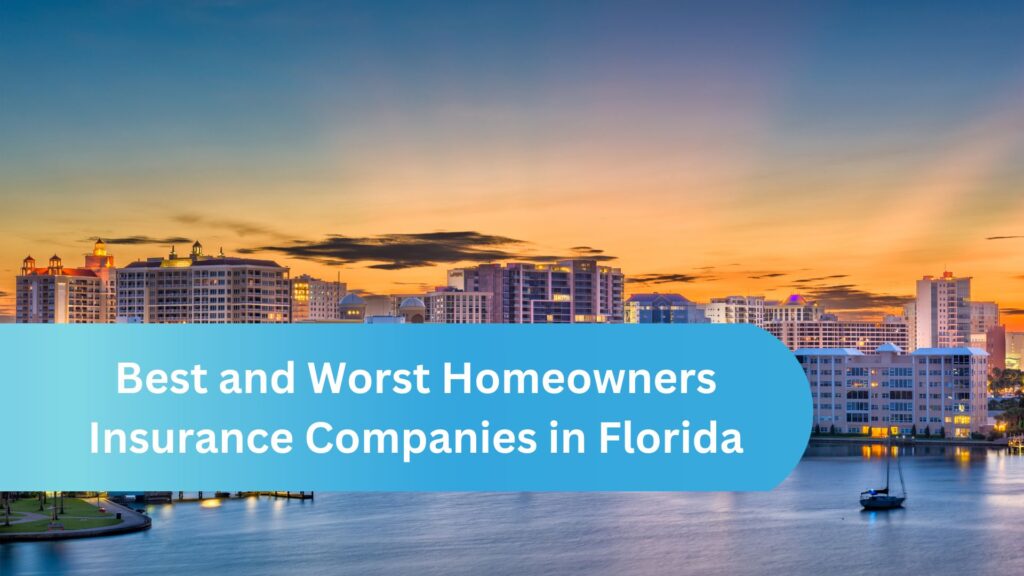
Florida has one of the most turbulent homeowners insurance markets in the United States — and if you’re considering a career inside it, that turbulence follows you to work every single day.
Seven Florida-domiciled insurers were ordered into liquidation between 2021 and 2023. Annual premiums averaged $14,140 in 2024 — nearly six times the national average of $2,490. In 2024 alone, nine Florida insurance companies closed 40–50% of homeowner claims with no payment, with People’s Trust Insurance denying payment on three out of every four claims filed. After Hurricanes Milton and Helene tore through the state that same year, thousands of homeowners with damaged properties received nothing from their insurers.
For the people who work in this industry — claims adjusters, underwriters, customer service representatives, agents, and operations staff — these aren’t just statistics. They’re the daily reality of a working environment unlike almost any other in the country.
This guide is for anyone exploring a career in Florida’s homeowners insurance sector. We cover the best and worst companies to work for, based on Glassdoor and Indeed employee reviews, documented business practices, claim denial data, and the structural conditions that make some employers far more sustainable than others.
Why Working in Florida Homeowners Insurance Is Different
Before naming companies, it’s worth understanding what makes this market uniquely difficult for the people working inside it.
The claim denial pressure is extreme and well-documented. According to a 2025 Weiss Ratings report cited by Newsweek, 16 major US insurers closed between 50–78% of homeowner claims with no payment in 2025. Florida-domiciled carriers dominate that list. For adjusters, this creates a daily ethical burden — processing denials on claims they may personally believe are valid, under pressure from management to close files quickly.
Hurricane season is a true operational emergency. When a major storm hits — and Florida averages more landfalling hurricanes than any other state — claims volume can surge by hundreds of percent in days. Adjusters who carry manageable caseloads in January can find themselves drowning in October. As one Florida tort reform analysis by Gen Re noted, inflated litigation demands force adjusters to spend more time reworking files, defending prior decisions, and maintaining consistency under pressure — stretching already maxed-out teams even thinner.
The market is still recovering from a structural collapse. Florida’s insurance market went through a near-systemic failure between 2020 and 2023. Many carriers that survived did so by dramatically restructuring operations, cutting staff, or both. The companies that emerged from that period are not the same organizations they were — and for employees, that evolution has been deeply uneven.
Litigation follows you home. Florida’s legal environment for insurance claims has historically been among the most contentious in the US. While recent legislative reforms have reduced property litigation by 36% since 2021 according to the Florida Office of Insurance Regulation, the backlog of contested claims and the adversarial culture built up over years doesn’t disappear overnight.
With that context established, here’s what the employer data actually shows.
The Worst Homeowners Insurance Companies to Work For in Florida

1. Citizens Property Insurance Corporation
Glassdoor rating: 2.6 / 5 — 28% below the insurance industry average of 3.6 Only 22% of employees would recommend it to a friend Key complaints: Broken RTO promises, layoffs after pledging job security, political environment, mission instability
Citizens is Florida’s insurer of last resort — a state-created nonprofit that exists to cover homeowners who can’t find coverage in the private market. That mission sounds meaningful. The reality of working there has, in the last two years, become a cautionary tale about how quickly institutional trust can be destroyed.
The specific pattern employees describe is a betrayal of explicit promises. Staff were told the company would not pursue layoffs. Layoffs came anyway. Employees were told remote work arrangements that had proven effective would continue. A mandatory return-to-office policy was then imposed — triggering what multiple employees describe as an exodus of experienced staff who had other options.
One claims adjuster with more than eight years at the company wrote in late 2024: “Return to the office is the worst decision made. Morale is way down. No one wants to return to the office when we performed very well from home. Bad decision by new CEO. Losing a lot of great employees due to RTO policy.”
Another current employee with more than three years tenure described the broader pattern: “This company has gone in a different direction over the past couple of years. Massive changes without consulting employees, less able to manage work life balance, and layoffs after promising not to lay anyone off.”
Only 19% of employees believe Citizens has a positive business outlook — a devastating number for any organization, but particularly jarring for a state-backed insurer whose mandate is to be a stable last resort. The board’s stated mission of deliberately shrinking Citizens as private market capacity returns has created an organization where employees increasingly feel like the company is working against its own survival — and by extension, against theirs.
Bottom line for job seekers: Citizens’ combination of broken promises, RTO mandates, leadership instability, and a board-level mission to shrink the company makes it one of the most difficult Florida insurance employers to build a career at right now. The benefits are genuinely strong — that’s one of the few consistent positives in reviews — but benefits don’t compensate for a leadership environment that has demonstrably burned through employee trust.
2. Universal Property and Casualty Insurance (UPCIC)
Glassdoor rating: 3.0 / 5 Only 42% of employees would recommend it Key complaints: High turnover, leadership disconnection, hedge fund ownership culture shift, political internal dynamics, poor communication
Universal Property and Casualty is one of Florida’s largest private homeowners insurers, covering nearly 19 states. It’s also one of the more consistently criticized employers among Florida-specific insurance companies, for reasons that have become sharper since a hedge fund acquisition changed the organizational culture.
The pattern in employee reviews is a specific kind of dysfunction: high turnover that compounds itself. One employee who stayed 4.5 years described the experience directly: “The department experienced high turnover, affecting continuity, workload distribution, and morale. At times, communication within the team and from leadership felt dismissive or unprofessional… Leadership clarity and support were inconsistent, and internal dynamics occasionally felt political rather than collaborative.”
Another review captured a specific and telling problem: “Hedge fund came in and everything feels different now.” Private equity and hedge fund ownership of insurance companies is increasingly common — and the operational consequences for employees are consistently the same: cost pressure that flows down as workload increases, headcount reductions, and a shift from long-term relationship building to short-term financial extraction.
Universal’s Glassdoor scores on the dimensions that predict day-to-day experience are particularly low: work-life balance at 2.9, career opportunities at 2.8, and culture and values at 3.0. On the claims side, Universal was noted as handling claims “adequately but slowly” during the 2024 hurricane season — a pattern that translates into extended, high-pressure caseloads for adjusters managing frustrated policyholders.
Bottom line for job seekers: Universal’s compensation and benefits ratings are the best things about working there. The management, career trajectory, and communication scores tell a different story. Go in with realistic expectations, and if you’re in a claims role, prepare for significant volume during storm season with limited process support.
3. Homeowners Choice Property and Casualty Insurance
Glassdoor rating: 3.1 / 5 Key complaints: Management communication breakdowns, internal reputation problems, high local turnover
Homeowners Choice has a split reputation in the employee review data — some employees describe genuinely supportive management and positive team culture, while others point to communication failures from the top down and a local reputation in the Tampa market that has made recruiting increasingly difficult.
One review captured the tension directly: “Some great people, and good business plans, but ultimately the communication and management from the top down is too dysfunctional for long-term success. Their HR department is forced to look for hires outside of the Tampa market area, because of the local reputation earned, unfortunately, over years of not [treating employees well].”
That specific detail — HR recruiting outside its own backyard because of local reputation damage — is one of the more concrete signals of an organization with serious internal culture problems. Companies with genuinely strong cultures attract applicants from within their own communities. When local talent actively avoids a company, it reflects something real about what working there is like.
On the customer side, Homeowners Choice was among the worst-rated Florida carriers during the 2024 hurricane season, with public adjusters reporting that claims were “consistently delayed, denied, or underpaid,” leaving policyholders scrambling for repairs. That external pressure translates directly into internal pressure on the adjusters and customer service staff managing those interactions.
Bottom line for job seekers: Homeowners Choice has genuine supporters among its employees — particularly those who connect with specific managers or teams. But the systemic communication issues and the HR recruitment difficulties suggest this is a culture that depends heavily on which team you land in rather than one that’s consistently well-run.
4. People’s Trust Insurance
Claims denial rate: 75% of all homeowner claims closed with no payment in 2024 — the highest in Florida Employee visibility: Limited public review data, which is itself a signal
People’s Trust Insurance Company doesn’t have the volume of public employee reviews that Citizens or Universal do — and in the insurance industry, limited review data from a company with hundreds of employees is often a signal that the culture discourages public feedback.
What is publicly documented is its claims behavior: People’s Trust denied payment on three out of every four homeowner claims filed in 2024, topping the Weiss Ratings national list of worst claim payment rates. For the people working in the claims department, that denial rate is not just a statistic — it’s a daily working reality that requires either genuine belief that three-quarters of claims are legitimately payable, or a resignation to processing outcomes that many policyholders and advocates describe as unfair.
A company whose primary operational metric is closing claims without payment at that rate creates a specific kind of working environment: one where adjusters are either aligned with aggressive denial practices or are quietly struggling with the ethical dissonance of the work.
Bottom line for job seekers: Limited review visibility combined with the highest claim denial rate in Florida makes People’s Trust one of the highest-risk employer choices in the state for anyone who entered the insurance industry to help policyholders rather than systematically deny them.
The Best Homeowners Insurance Companies to Work For in Florida

Not every Florida insurance employer is a difficult place to work. These companies consistently receive stronger employee reviews — and, not coincidentally, tend to treat their customers better too.
1. Chubb
Customer claims performance: Consistently rated among the best in Florida for claims handling during the 2024 hurricane season Employee profile: Premium employer known for strong compensation and professional culture
Chubb operates at the high end of the Florida market, focusing on high-value homes and policyholders who need more comprehensive coverage. Its national Glassdoor rating of 4.0 reflects a professional culture that most insurance employers in Florida don’t come close to matching.
Public adjusters who worked claims from both sides during Hurricanes Milton and Helene specifically called out Chubb for consistently prioritizing policyholders and processing claims quickly without excessive pushback — a meaningful signal about how the internal culture operates. Companies that treat customers well in high-pressure environments tend to treat employees better too.
Chubb’s Florida presence is primarily in claims handling, underwriting, and agency management rather than large-scale operations centers. If you can get in, the culture and compensation are among the best available in Florida’s homeowners insurance market.
2. State Farm
Florida market position: Largest homeowners insurer in Florida by some measures; lowest sample premiums at approximately $3,195/year Employee profile: Mixed but generally positive; strong benefits and stability
State Farm’s overall Glassdoor rating sits around 3.4 nationally — which puts it above Citizens and on par with or better than most Florida-domiciled carriers. More importantly, in customer satisfaction surveys for Florida specifically, State Farm leads the state’s top companies for customer service, claims handling, and value.
For employees, State Farm’s size creates both advantages and frustrations. The training infrastructure, benefits, and job stability are genuine strengths. The bureaucracy, promotion pace, and variability in management quality are the consistent criticisms. The experience is heavily manager-dependent — which is true of most large insurers but perhaps more pronounced at State Farm given its decentralized agent model.
State Farm’s Florida operations are relatively stable compared to many competitors that have dramatically reduced their in-state exposure. That stability matters significantly in a market where insolvencies have been common.
3. Progressive (Florida operations)
Claims performance during 2024 hurricane season: Rated positively by public adjusters for proactive and fair claims handling National Glassdoor rating: 3.5 / 5, with specific notes on Florida operations
Progressive’s employee reviews tell a complicated story nationally — the KPI pressure, production targets, and workload concerns that appear in our Texas insurance article apply in Florida too. But the company’s performance during the 2024 hurricane season stands out: public adjusters specifically noted Progressive was proactive and fair with claims, and policyholder feedback was positive relative to most Florida-specific carriers.
For employees, Progressive offers what most Florida-domiciled insurers don’t: the stability of a large national carrier, meaningful training infrastructure, and a company not dependent entirely on the Florida market for its survival. One specific employee concern worth noting is the transition from training caseloads to full production volume — described as abrupt and poorly supported — which is worth asking about specifically during any interview.
4. USAA (for eligible candidates)
Overall employee rating: Among the highest in the insurance sector nationally Key strength: Mission-driven culture; serves military members and veterans
USAA’s Florida eligibility requirement limits its reach — you need to be a military member, veteran, or qualifying family member to hold a policy. But for those who can work there, USAA consistently earns some of the strongest employee reviews in the insurance industry, driven by a sense of mission that most carriers can’t replicate.
USAA doesn’t have a large Florida-based operations center, but its claims and service roles that cover Florida policyholders carry the same culture and compensation standards as its national operations.
Red Flags to Watch for When Interviewing at Any Florida Insurance Company

Florida’s insurance market has specific warning signs that don’t show up in other states.
Ask about their Demotech vs. AM Best ratings — and whether they match. As a 2024 Harvard study documented, nearly 20% of Florida insurers rated “A” by Demotech became insolvent while holding that rating between 2009 and 2022. A significant gap between Demotech and AM Best ratings signals financial fragility — which translates into operational instability for employees.
Ask about their claim closure rate. You can look this up yourself before the interview at the NAIC consumer information center. A company closing more than 40% of claims without payment is telling you something important about its business model — and the ethical environment you’d be working inside.
Ask what hurricane season looks like for staff specifically. How are caseloads managed when a major storm hits? Is there mandatory overtime? Are CAT adjusters brought in, and if so, how does that affect permanent staff? The honesty of the answer — and whether they have a real answer at all — is telling.
Ask about the company’s non-renewal trajectory. In 2024, Florida had the highest rate of home insurer non-renewals in the US, at 3.35% of policyholders. Companies actively reducing their Florida exposure are also likely to reduce their Florida workforce. Ask directly whether the company is growing, holding, or contracting its Florida book of business.
Check NAIC complaint ratios before accepting any offer. The National Association of Insurance Commissioners publishes a complaint index where 1.0 is the national average. Any Florida insurer significantly above 1.0 has both a customer problem and, almost certainly, an internal pressure problem that falls on their claims and service staff. You can check any admitted carrier at content.naic.org.
Before accepting any insurance role in Florida, research the employer at WiseWorq to read unfiltered reviews from current and former employees — particularly claims adjusters and customer service staff, whose experience is the truest indicator of what daily working life actually looks like.
The Bottom Line
Florida’s homeowners insurance market is genuinely one of the most difficult operating environments in the country — for policyholders and for the people who work inside it. The claim denial rates, hurricane pressure, litigation history, and market instability all flow directly into how these companies operate internally.
That doesn’t mean you can’t build a good career here. But it does mean you need to choose your employer as carefully as a Florida homeowner should choose their insurer. The companies on the better end of this list — Chubb, USAA, and State Farm — consistently treat both customers and employees more fairly than the Florida-specific carriers that dominate the bottom of the rankings.
The warning signs are visible before you accept an offer. Use the NAIC data, check Glassdoor specifically for claims adjuster reviews, and look at how the company performed during the last major hurricane season. The employer who treats policyholders fairly during a crisis is usually the same one treating employees fairly the rest of the year.
Research any Florida insurance employer at WiseWorq before you apply — and read what claims adjusters specifically say about management, workload, and whether the job matches what they were told during recruitment.
Sources
- Newsweek, “Florida Home Insurers With Worst Claim Payment Rates,” April 2025 (nofollow)
- The American Prospect, “New Reforms, Same Old Florida Home Insurance Market,” November 2025 (nofollow)
- Louis Law Group, “16 Insurance Companies Denied Over Half of All Homeowner Claims in 2025” (nofollow)
- Latent Insurance, “Best and Worst Florida Homeowners Insurance Companies 2026” (nofollow)
- Base Claims, “Best and Worst Homeowners Insurance Companies in Florida: Lessons from Hurricanes Milton and Helene,” March 2025 (nofollow)
- Gen Re, “Florida Property Tort Reforms — Evolving Conditions,” September 2025 (dofollow — institutional research)
- Insurify, “Florida Insurance Crisis Explained” (nofollow)
- NAIC Consumer Information Center — complaint index data (dofollow — government)
- Glassdoor — Citizens Property Insurance employee reviews, 2024–2025 (nofollow)
- Glassdoor — Universal Property and Casualty Insurance employee reviews, 2024–2025 (nofollow)
- Indeed — Homeowners Choice Property and Casualty Insurance employee reviews (nofollow)
Related WiseWorq Guides
- Worst Homeowners Insurance Companies to Work For in Texas (2026) — the same employer-focused analysis for the Texas market
- Best Paying Jobs in Consumer Services (2026) — including claims adjuster and insurance salary data
- Signs of a Toxic Workplace — how to recognize a bad employer before it costs you
- 50 Unique Interview Questions to Ask an Employer (2026) — how to interrogate any insurance employer before accepting
- 40 Best Questions to Ask at the End of an Interview (2026) — the questions that reveal the most about a company
- How to Decline a Job Offer — for when your research tells you to walk away
- Exit Interview Questions — for when you’re ready to leave a Florida insurance employer behind