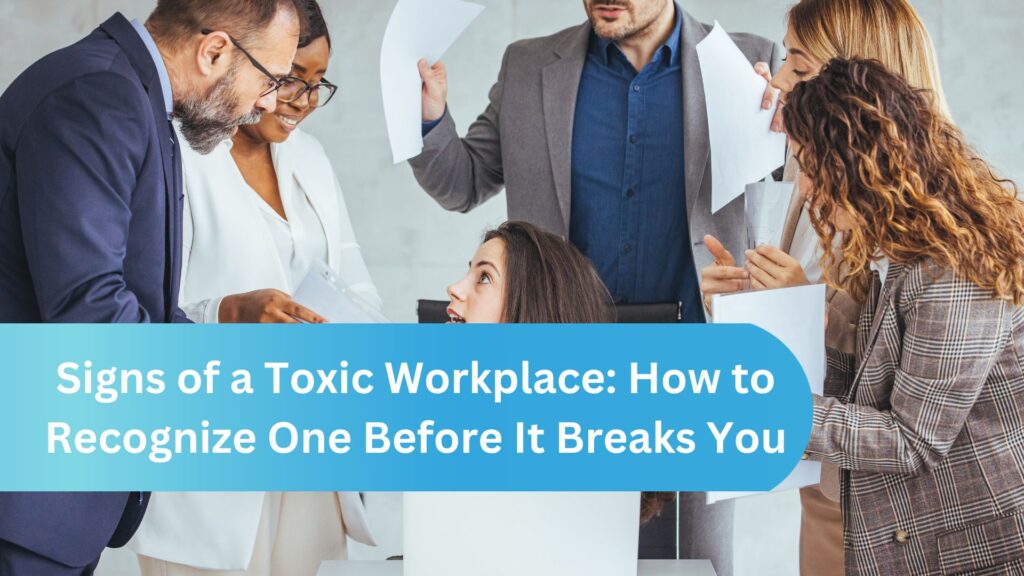
Most people don’t realize they’re in a toxic workplace until they’re deep inside one.
That’s not a failure of perception. It’s by design. Toxic workplaces rarely announce themselves on day one. The dysfunction creeps in slowly — disguised as a “high-performance culture,” normalized as “just how this industry works,” or obscured by enough good moments to keep you second-guessing yourself. By the time you’re certain something is wrong, the damage has often already been done.
One person who shared their experience publicly put it plainly: “I didn’t see the red flags when I was being recruited, nor in my job interviews. In my onboarding I had that ‘something’s not right’ moment here and there, but my betrayal blindness and reaction to cognitive dissonance led me to keep hoping for the best.”
That experience — the gradual dawning, the self-doubt, the hope that things will improve — is nearly universal among people who’ve worked in toxic environments. According to research compiled by Speakwise, toxic culture is 10 times more predictive of employee turnover than compensation. Workers will endure lower pay, longer commutes, and fewer perks if the environment feels healthy — but they will not tolerate disrespect, exclusion, or chronic stress regardless of salary.
The question isn’t whether toxic workplaces exist. It’s whether you can recognize one before it costs you your health, your confidence, or years of your career.
Here are the signs — real ones, drawn from data and the experiences of people who’ve been there.
The Scale of the Problem
Before the signs, the numbers are worth sitting with for a moment.
According to Speakwise’s 2026 toxic workplace statistics, 80% of US employees now say they work in a toxic environment — up from 67% just one year ago. In a recent study of over 2,000 employees across industries, 75% reported experiencing a toxic workplace culture, and 87% said it had a direct impact on their mental health.
Communication problems are the second most common cause of toxicity, with 69.8% of employees reporting this according to the iHire 2025 Toxic Workplace Trends Report. And the financial cost is staggering — culture-driven turnover has cost American businesses $223 billion.
These aren’t niche or industry-specific problems. They are a near-universal feature of working life in 2026. Which means recognizing the signs isn’t a survival skill for unlucky people — it’s something every working person needs.
Sign 1: Fear Is the Dominant Emotion
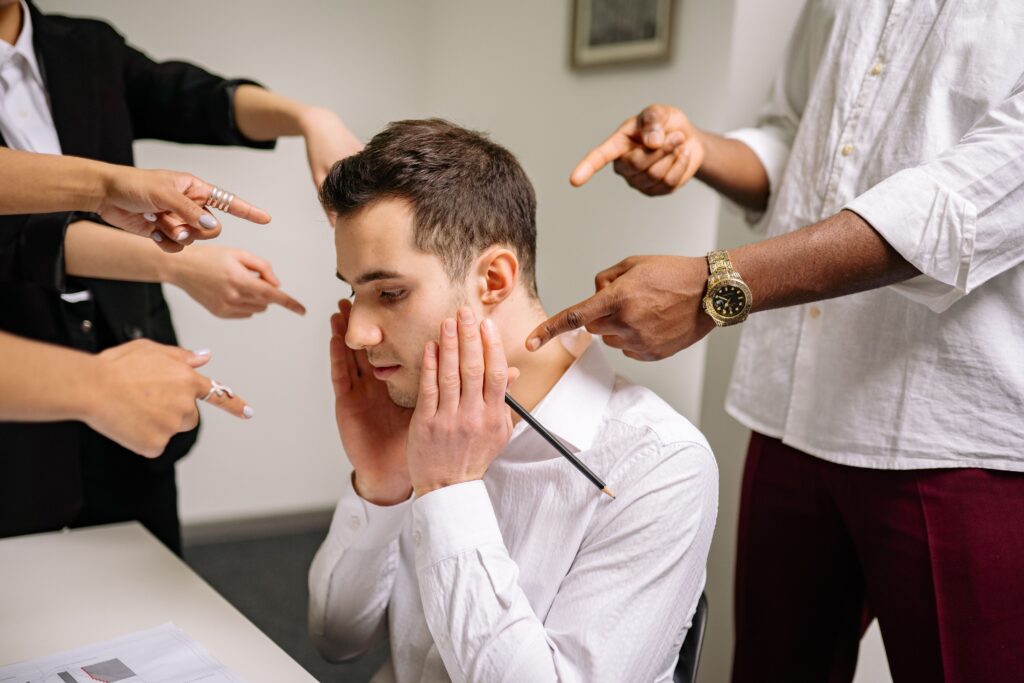
The clearest marker of a toxic workplace isn’t any single behavior. It’s a feeling — and that feeling is fear.
According to the APA’s senior director of applied psychology, when you look at how people describe a workplace that’s toxic, the number one common theme is “a sense of fear.” People are not just in a situation where they don’t like their work — they’re actually afraid for some reason. That finding comes from the APA’s Work in America Survey, which has tracked workplace wellbeing for years.
That fear takes different forms depending on the environment. Fear of making a mistake in front of a critical manager. Fear of being the next person laid off without warning. Fear of speaking up in a meeting and having your idea dismissed or — worse — attributed to someone else. Fear that a single misstep will be weaponized against you later.
As one leadership expert put it in a Rolling Stone Culture Council roundup: “One sign of a toxic workplace is when people constantly feel the need to stay guarded, as if any misstep could be used against them. When asking questions is seen as challenging authority instead of engaging thoughtfully, that’s a culture built on control, not growth.”
The insidious part is that fear-based cultures often present themselves as “high standards” or “accountability.” The difference is real but subtle: accountability creates consequences for genuine failures. Fear-based cultures create consequences for asking questions, disagreeing with decisions, or simply having a bad week.
If you find yourself rehearsing what you’re going to say before sending a routine email to your manager, that’s not normal stress. That’s fear — and it’s a sign.
Sign 2: You Dread Sunday Evenings
It became so common it got a name: Sunday Scaries. The low-grade dread that settles in on Sunday afternoon as the workweek approaches.
Most people experience mild versions of this occasionally. But there’s a difference between normal work stress and the kind of workplace that follows you home, takes over your conversations with family, steals your sleep, and makes you feel anxious before you’ve even opened your laptop.
As Career Contessa notes in their widely-shared guide on toxic work environments, toxic workplaces rarely stay at work. They typically follow you home, take over your conversations with loved ones, steal away much-needed sleep, and can lead to stress, burnout, depression, and serious disruptions in your personal life.
One person described their experience on a public forum after leaving a toxic tech company: “Yep. Still have a little PTSD from my time at [my former company]. I left a month ago. What a toxic sh*tshow that was. Like, rationally, I know I am in a good space now, but the underlying feeling of dread and anger still has some legs.”
The Sunday Scaries becoming a week-long dread is your nervous system telling you something your rational mind may still be explaining away. Take it seriously.
Sign 3: Poor Leadership With No Accountability
According to the iHire 2025 Toxic Workplace Trends Report, the top culprit of workplace toxicity was poor leadership or management. Of the employees who cited this, 71.9% said there was a lack of accountability for leadership’s actions, and 65.6% said leaders showed favoritism or biased treatment of employees.
Leadership dysfunction shows up in patterns, not isolated incidents. A manager who publicly humiliates team members. A director who takes credit for ideas and distributes blame for failures. An executive who makes decisions behind closed doors and delivers them as edicts, then wonders why morale is poor. Leaders who are visibly held to a different standard than everyone else — arriving late, missing deadlines, treating commitments as optional.
The accountability gap is the specific thing to look for. Every workplace has imperfect leaders. What distinguishes a toxic environment is whether bad behavior at the top goes unchallenged — and it almost always does, because the same power structures that permit the bad behavior also insulate it from consequence.
One woman, Denise Conroy, described her three years at a major media company in her Substack newsletter Bridges to Burn: “When I left, I was at an all-time low. I’ll never forget that first day of being unemployed — I woke up feeling worthless.” The bullying she experienced was never addressed by the organization. The leaders who created it faced no consequences. That gap between behavior and consequence is the defining feature of toxic leadership environments.
Sign 4: Gaslighting Is Common and Normalized

Gaslighting became Merriam-Webster’s word of the year in 2022 — and for good reason. In the workplace, it makes employees question their own perceptions. According to TechTarget’s analysis of toxic workplace culture, examples include hearing gossip about oneself, feeling belittled about emotions, being excluded from meetings directly related to one’s job, and hearing negative accounts of performance that contradict what you’ve been told.
In practice, gaslighting typically comes from managers who deny reality to avoid accountability. Your workload is genuinely unmanageable — but your manager tells you that everyone else handles it fine, implying the problem is you. You raise a concern in a meeting and it’s dismissed — then the same idea is praised when someone else presents it two weeks later. You’re told your performance is excellent in a one-on-one, then blindsided with a formal warning.
One person described their experience in a tech company: “My manager was a jerk and would gaslight me, making it seem like I’m not reading emails fast enough, or not remembering enough details — when I was hustling day and nights to be on top of everything. We were having 1000 different conversations. It was impossible to remember and keep track of everything. And my manager would belittle me as if I was the problem, when people were dropping like flies — we lost over 50% of the team in just the few months I was there.”
The research backs up how serious this is. A 2025 peer-reviewed study published in PMC’s Healthcare journal found a significant association between workplace gaslighting, job burnout, and turnover intention among nurses. The impact isn’t limited to healthcare — the pattern holds across industries.
The most reliable sign that you’re being gaslit rather than fairly managed: your self-doubt about your own competence appeared after joining this specific workplace, not before.
Sign 5: High Turnover That Nobody Talks About
When people are constantly quitting, getting fired, or “mysteriously disappearing” — and leadership never explains why or what’s changing as a result — that’s a sign.
High turnover is one of the most visible symptoms of a toxic culture, and also one of the most aggressively minimized. “Oh, that person just wasn’t the right fit.” “We’re going through some changes.” “This role has always had a steep learning curve.” These explanations exist in every workplace, but in toxic ones they become a constant refrain applied to a constant stream of departures.
Research by MIT Sloan found that toxic culture is 10 times more likely to drive attrition than pay dissatisfaction — translating to nearly $50 billion annually in turnover costs. And with only 21% of US employees trusting their organization’s leadership, when that trust breaks down people leave not because they found something better, but because staying feels worse than the uncertainty of starting over.
If you’re interviewing somewhere and you ask “how long has the person before me been in this role?” and the answer involves multiple people over a short period — take that seriously. Ask why each person left. The evasiveness or honesty of the answer will tell you more than any other question.
Sign 6: Communication Is Broken or Weaponized
According to the iHire 2025 Toxic Workplace Trends Report, communication problems are the second most common cause of toxicity, with 69.8% of employees reporting issues including inconsistent messaging, lack of transparency, and withholding information — all of which leave people confused and suspicious.
In healthy workplaces, communication is a tool for getting things done. In toxic ones, it becomes something else entirely — a mechanism for control, a way of keeping people off-balance, or simply so dysfunctional that basic coordination becomes daily frustration.
The specific patterns to recognize:
Decisions made in private, announced publicly with no room for input. This isn’t just poor management — it’s a power signal. It tells employees their perspective is irrelevant, which over time makes them stop sharing it.
Information hoarded as currency. In some toxic environments, knowing things other people don’t is a source of status. People protect access to information rather than sharing it, creating an environment where no one has what they need to do their job effectively.
Praise in private, criticism in public. The reverse of what good management looks like — and a reliable creator of fear and self-protection.
Constant after-hours availability expectations. According to Microsoft’s Work Trend Index research, American employees are experiencing what they call “the infinite workday” — constant notifications, emails, and alerts, with employees responding to messages early in the morning or late at night. When this is normalized and expected without compensation, it’s a communication and boundary failure that signals a deeper cultural problem.
Sign 7: Cliques, Gossip, and Exclusion

At its core, a toxic work environment is one where dysfunction becomes the norm: poor leadership, unchecked gossip, bullying, favoritism, and blame culture thrive, often without accountability. This pattern is documented consistently across industries in Edstellar’s 2026 toxic work environment research.
Gossip exists in every workplace. The kind that characterizes toxic ones is different in scope and function. It becomes the primary communication channel — the way people actually find out what’s happening. It’s used to build alliances and isolate targets. And it goes unchallenged by management, either because management participates or because they’ve decided it’s not worth addressing.
Cliques operate the same way. Every workplace has social groups. In toxic ones, those groups determine who gets the good assignments, who gets warned before bad news lands, who gets included in the meeting where decisions are actually made — and who doesn’t. The social structure becomes the power structure, and access is determined by loyalty rather than merit.
One early-career employee described their restaurant experience: “The environment was extremely toxic, people turning on each other, management being condescending, people you worked around didn’t respect each other or you. I got tired of it and barely lasted the three months I did.”
The tell is whether the cliquishness is visible to management and tolerated, or invisible because it involves management directly.
Sign 8: Your Body Is Telling You Something
This is the sign most people discount for longest. Stress manifests physically before it registers mentally — and a toxic workplace will make you physically unwell in ways that are easy to attribute to other causes.
As Skooc’s research on toxic work relationships explains, burnout isn’t just about being tired — it’s a state of complete mental and emotional exhaustion. Chronic workplace stress leads to memory issues and brain fog where tasks that once seemed manageable become impossible to complete, as well as disrupted sleep, physical fatigue, increased illness, headaches, and digestive problems.
According to the iHire 2025 Toxic Workplace Trends Report, over 60% of employees have experienced stress-related health issues due to conditions at their workplace. A 2024 study by the Boston Consulting Group found that 48% of workers across eight countries are grappling with burnout.
The pattern that specifically indicates a workplace cause: symptoms that appear during the week and ease on weekends. That cyclical pattern — feeling unwell Monday through Friday, feeling better by Saturday afternoon — is your body’s response to a chronic stressor that has a very clear source. If you’re experiencing physical symptoms that track your work schedule, don’t wait for a doctor to make the connection. Trust what your body is already telling you.
Sign 9: No Psychological Safety
The clearest sign of a toxic workplace is when people stop speaking up. When fear replaces trust, culture is already broken — and this is backed by decades of organizational research, most famously Google’s Project Aristotle study, which identified psychological safety as the single biggest predictor of team performance.
Psychological safety is the belief that you can speak up, make mistakes, and disagree without being punished for it. It’s also one of the first casualties of a toxic culture.
In environments without it, people stop raising problems. They stop flagging risks. They stop suggesting improvements. They do exactly what they’re told and nothing more, because any initiative carries the risk of blame if it goes wrong. The result is an organization that is simultaneously overloaded with work and starved of the innovative thinking that would make it more effective.
As one leadership expert noted in the Rolling Stone Culture Council’s toxic workplace roundup: “When asking questions is seen as challenging authority instead of engaging thoughtfully, that’s a culture built on control, not growth.”
Ask yourself: in your last team meeting, did anyone disagree with anything? Did anyone raise a concern that hadn’t already been approved? If the answer is no — across multiple meetings, over multiple weeks — that silence isn’t consensus. It’s fear.
Sign 10: Your Self-Worth Has Eroded Since Joining
This is perhaps the most painful sign, and the hardest to name while you’re in the middle of it.
One of the most damaging aspects of toxic workplaces is how they chip away at self-esteem. As Skooc’s research on workplace mental health documents, constant criticism, micromanagement, or gaslighting can make even the most skilled professionals doubt themselves — and that gradual erosion of confidence affects not only your work but your personal life as well.
People leave toxic workplaces and carry the damage with them. As one person described after leaving a high-pressure tech role: “I find myself getting paranoid over not remembering little details all the time or asking repeat questions. I realize this is a result from the toxic workplace I was in.”
The clearest diagnostic question is this: are you less confident now than you were when you started this job? Not because you’ve encountered genuinely difficult challenges that revealed real gaps — but because the environment has systematically made you feel inadequate regardless of your actual output?
Talented, competent people leave toxic workplaces doubting skills they had long before they arrived. That erosion is one of the most lasting harms these environments cause — and one of the most important reasons to name what’s happening before it becomes the story you tell yourself about your own abilities.
What to Do When You Recognize the Signs

Name it clearly. The first step is stopping the self-justification. Not “this is just a stressful time,” not “every job has its challenges,” not “maybe it’s me.” If multiple signs on this list resonate, you are in a toxic environment. Name it to yourself, and if you trust them, to someone else.
Document everything. Emails, messages, meeting notes — any instance of the behavior that’s making you feel unsafe or undermined. Documentation serves two purposes: it creates a record if you need it legally, and it helps you see patterns that are easy to minimize in isolation.
Find at least one safe ally. Toxic workplaces are designed, intentionally or not, to isolate. Finding one colleague you trust — someone who sees what you see and can reflect reality back to you — is one of the most protective things you can do while you’re still inside it.
Stop waiting for it to get better on its own. As Business Women’s toxic workplace checklist puts it: one bad day is normal. A cycle of gaslighting, exclusion, or retaliation is a pattern. Patterns don’t self-correct without external intervention — a leadership change, a policy change, or your departure. If the first two aren’t happening, the third is your lever.
Protect your health first. If the physical symptoms are serious — disrupted sleep, anxiety, chronic illness — see a doctor and be honest about the workplace context. Your mental health is not a secondary concern.
Start looking, quietly. You don’t have to quit today to start exploring what else exists. Quietly updating your profile, reaching out to your network, and researching other employers costs you nothing and gives you options. Having options changes how you experience the situation you’re in.
Before accepting any new role, research the employer at WiseWorq — read what current and former employees say about leadership, culture, and day-to-day reality. The signs that something is wrong are almost always visible in employee reviews before they become visible in an interview.
The Signs You Can Spot Before You Even Start
If you’re currently job hunting and want to screen for toxicity before accepting an offer, these are the signals to watch for during the interview process itself.
Interviewers bad-mouth the previous person in the role. This tells you leadership externalizes blame and will do the same to you eventually.
Vague or evasive answers about why the role is open. “We’re growing!” is different from an honest account of what happened to the last person.
The interview feels like a sales pitch, not a conversation. Employers who are confident in their culture ask you as many questions as you ask them. Employers who need to convince you are telling you something.
No one seems happy. If you visit the office and the energy is flat, eye contact is avoided, and people seem to be getting through the day rather than engaged in it — you’re seeing the culture as it actually is.
“We’re like a family here.” As we’ve noted before on WiseWorq, this phrase has become so consistently associated with boundary violations and overwork that it now functions as an industry-wide warning signal.
Use the interview questions in our dedicated guide to go deeper — asking specifically about how conflict is handled, what happened to the last person who left, and what the company would change about itself if it could.
The Bottom Line
Toxic workplaces are not rare edge cases. They are, statistically, the majority experience for working people in 2026. That doesn’t make them acceptable — it makes recognizing them more urgent, not less.
The signs listed above are not about sensitivity or having unrealistic expectations of work. They are documented, researched, and experienced by millions of people across every industry and seniority level. If you recognize your workplace in these pages, that recognition is valuable — even when it’s painful.
You deserve to work somewhere that doesn’t require you to choose between your professional ambitions and your mental health. Those things are not supposed to be in conflict.
Research any company before you apply or accept an offer at WiseWorq — where real employees share the unfiltered truth about what it’s actually like to work there.
Related WiseWorq Guides
- Why Are Union Workplaces Toxic? — a specific look at how toxic dynamics play out in unionized environments
- 50 Unique Interview Questions to Ask an Employer (2026) — how to screen for toxicity before you accept an offer
- 40 Best Questions to Ask at the End of an Interview (2026) — close every interview with the questions that reveal the most
- Worst Financial Advisor Companies to Work For (2026) — specific employers with documented toxic patterns
- Worst Homeowners Insurance Companies to Work For in Texas (2026) — another industry where toxic culture is well documented
- Exit Interview Questions: What Employers Ask and How to Answer Professionally — for when you’ve decided it’s time to leave
- How to Decline a Job Offer: A Complete Guide with Examples — for when your research tells you to walk away before you even start