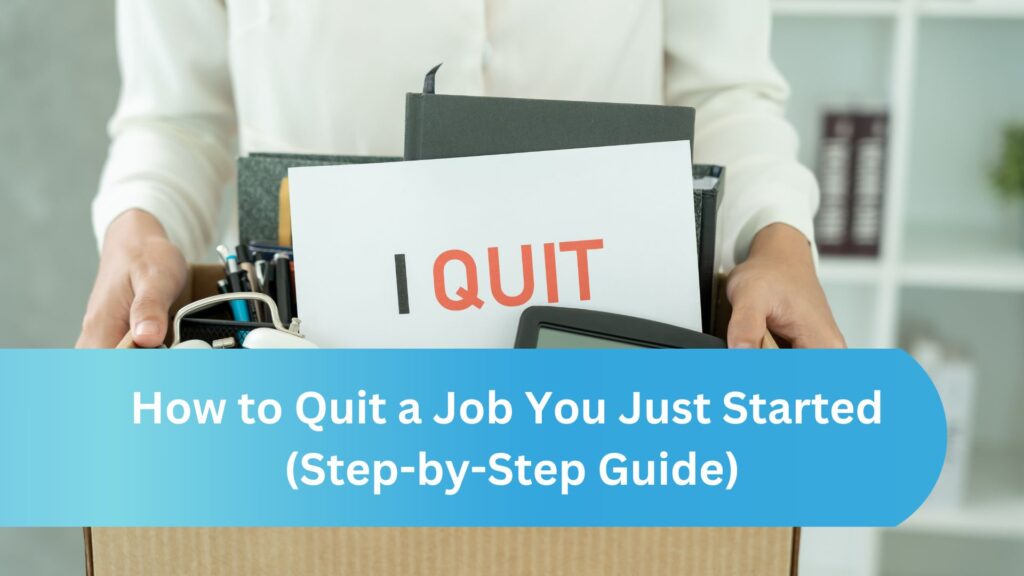
Sometimes it takes a few weeks. Sometimes it takes a couple of months. But every so often, a new job reveals something a job description and a few interviews never could — no real onboarding, no structure, leadership pointed somewhere other than the actual business, and a culture that makes it clear this isn’t a fit worth waiting out.
If that’s where you are, here’s the reassurance up front: it’s genuinely okay to quit a job you just started. It happens far more often than people assume, and how you leave matters far more than how soon. This guide covers exactly how to do it — professionally, with the right notice, and without burning a bridge you might need later.
Is It Actually Okay to Quit a Job You Just Started?
Yes. Most employment in the US is at-will, meaning you’re free to leave whenever you decide to, and short stints are more common than they feel in the moment. Career advisors are consistent on one important exception to the usual playbook: the standard advice to give two weeks’ notice comes with a caveat — unless the work environment is genuinely harmful or toxic. That caveat exists because sometimes the standard rules don’t apply, and it’s worth knowing it’s there before you talk yourself out of an exit you already know is right.
You’re not required to grit your teeth through a bad fit because of how it might look. How it looks depends almost entirely on how you leave — not on how soon.
New-Job Jitters vs. an Actual Red Flag
This is worth getting right before you act, because the two feel similar in the first few weeks. As career advisors note, people often confuse the discomfort of being new with having made the wrong decision — every job has a learning curve, and it’s worth separating the two before you act.
Adjustment period looks like: you don’t know the systems yet, you feel behind, but people are willing to teach you, there’s some structure even if it’s imperfect, and the discomfort is mostly about your own learning curve. This kind of discomfort usually eases within a few weeks.
A real red flag looks like: the dysfunction isn’t about catching up — it’s structural. There’s no real onboarding to speak of, leadership’s attention is visibly somewhere other than the actual business, and the situation gets worse the longer you’re there rather than better. Our guide on signs of a toxic workplace goes deeper into this exact pattern if you want to confirm what you’re seeing.
That last point is the clearest signal. Adjustment periods resolve with time. A genuine mismatch doesn’t — it just keeps revealing more of itself. If you’re a month or two in and the picture is getting clearer rather than more comfortable, that’s information worth acting on.
How to Actually Quit (Step by Step)

1. Tell your manager first — directly, not by message or in a group setting
Tell your direct manager privately, in person or on a call, before anyone else hears it secondhand. A short stint handled cleanly becomes a one-line note on your résumé — handled badly, it becomes a story people tell about you for years. Aim for the former.
2. Keep the reason short, honest, and forward-looking
You don’t owe a detailed account of everything that went wrong. Something simple and true is enough: “After [timeframe], I’ve realized this role isn’t the right fit for me, and I think it’s best for both of us if I move on now rather than later.” Honest, brief, and it doesn’t invite a debate.
3. Decide on notice — and know you’re allowed to shorten it
Two weeks is the standard courtesy. But that standard assumes a standard situation. If the environment is genuinely unmanaged or disrespectful, a shorter notice — or in extreme cases, none — is professionally defensible. If you can offer some notice without real harm to yourself, it smooths the exit and any future reference conversations. If staying even a few more days is genuinely unsustainable, your wellbeing takes priority over the company’s convenience.
4. Send a brief, professional written resignation
Keep it to a few lines: your intention to resign, your last working day, and a neutral note of thanks — even if it feels like a formality, because it is one. Don’t over-apologize, and don’t use the letter to list grievances — it exists to create a clean paper trail, nothing more. Our full guide on how to quit a job has a ready-to-use resignation script if you want a template to adapt.
5. Don’t over-explain to your team
You can be warm and honest with colleagues you liked without narrating the full situation on your way out. “It wasn’t the right fit, and I wish you all the best” is a complete answer to anyone who’s curious.
The Practical Stuff Worth Checking First 
A few things to think through before you formally resign, especially this early into a role — career advisors consistently flag these as the practical checks people skip when they’re eager to leave:
Check for anything you’d owe back. If you received a signing bonus, relocation assistance, or paid training, look for a repayment clause tied to an early exit. It doesn’t mean don’t leave — it means know the number before you do.
Understand your health insurance timeline. If coverage just started, confirm exactly when it ends after resignation, and have a short-term plan ready (COBRA, a marketplace plan, or a partner’s plan) so there’s no coverage gap. If any PTO or final-pay questions come up too, our how to quit a job guide breaks down the state-by-state rules on final paychecks and payout.
Have some financial runway if you can. Leaving before your first paycheck, or without another role lined up, is sometimes still the right call — but go in aware of how much cushion you actually have.
Get your own files in order beforehand. Nothing confidential — just anything genuinely yours — since access can be cut quickly once notice is given, especially at less organized companies.
Should This Job Go on Your Résumé?
It depends on how long you were there and what you can say about it.
Under a month: most career advisors suggest it’s fine to leave it off your résumé entirely — a stay that brief rarely needs to be accounted for.
A couple of months: you can still leave it off, or include it if you have a clean, brief explanation ready for an interview — something like “it became clear early on that the role didn’t match what was described, and I made the call to move on quickly rather than waste either side’s time.” That reads as a mature, self-aware answer, not a red flag — most interviewers have heard versions of it before.
Whatever the length, keep the explanation neutral, brief, and forward-looking in any future interview. The same rule that applies to your resignation applies here too.
The Bottom Line
A short stint that ends because the fit was genuinely wrong isn’t a failure — it’s a normal part of a working life, and how you handle the exit is what people actually remember. Tell your manager first, keep your reasons brief and professional, offer whatever notice is reasonable given the situation, and don’t let the discomfort of leaving early talk you into staying somewhere that isn’t working. A quick, clean exit is a footnote. Staying in a bad fit for the sake of appearances is the thing that actually costs you time.
Before you accept your next offer, research the company at WiseWorq — real employee reviews can surface in minutes what sometimes takes weeks to see for yourself on the inside.
Related WiseWorq Guides
- How to Quit a Job — the full playbook on notice, final pay, and PTO for any tenure length
- Signs of a Toxic Workplace — recognizing dysfunction earlier, before it costs you months
- Warning Signs of a Bad Company Culture — spotting this before you ever accept an offer
- 50 Unique Interview Questions to Ask an Employer — questions that can surface culture issues beforehand
- How to Use Job Search Engines Effectively — researching a company’s real culture before you apply
- How to Turn Down a Job Offer but Keep the Door Open — if you catch the warning signs before you even start