
There’s a number that explains everything about why credit card companies work so hard to reach you before you turn 25.
Gen Z cardholders carry the lowest average balances of any generation — around $2,900. They also face the highest average APR of any age group at 22.8%. Lower balances, higher rates. That combination isn’t an accident, and it isn’t a coincidence. It’s the business model.
Young adults are the most valuable customer acquisition target in consumer finance because the first card someone opens tends to stay in their wallet for decades. Capture someone at 19 and you may hold that relationship for forty years. Which is why the marketing budget aimed at this demographic is enormous, and why some of the tactics have drawn direct regulatory action.
This guide covers what those tactics actually are — including the ones that don’t appear in any bank’s marketing materials — plus an honest accounting of what credit cards genuinely offer young adults and what they cost when things go wrong.
Why You’re Being Targeted Specifically by Credit Card Companies?
Before the tactics, understand the economics driving them.
The credit card industry generates roughly $174 billion annually in interest income. That revenue doesn’t come from customers who pay in full every month — those customers cost the issuer money in rewards and processing. It comes from revolvers: people who carry a balance.
Young adults are statistically more likely to become revolvers, and to stay that way longer. Delinquency among borrowers under 30 rose from 5.1% in Q4 2021 to 10.9% in Q4 2024 — a 114% increase in three years. Young adults aged 18–29 transition into 90-day credit card delinquency at roughly three times the rate of borrowers aged 60–69.
That’s the customer profile these campaigns are designed to acquire. Not to be cruel about it — plenty of young cardholders do fine — but understanding who’s profitable to a lender explains why the marketing is so relentless.
Tactic 1: Getting You Into a Branch
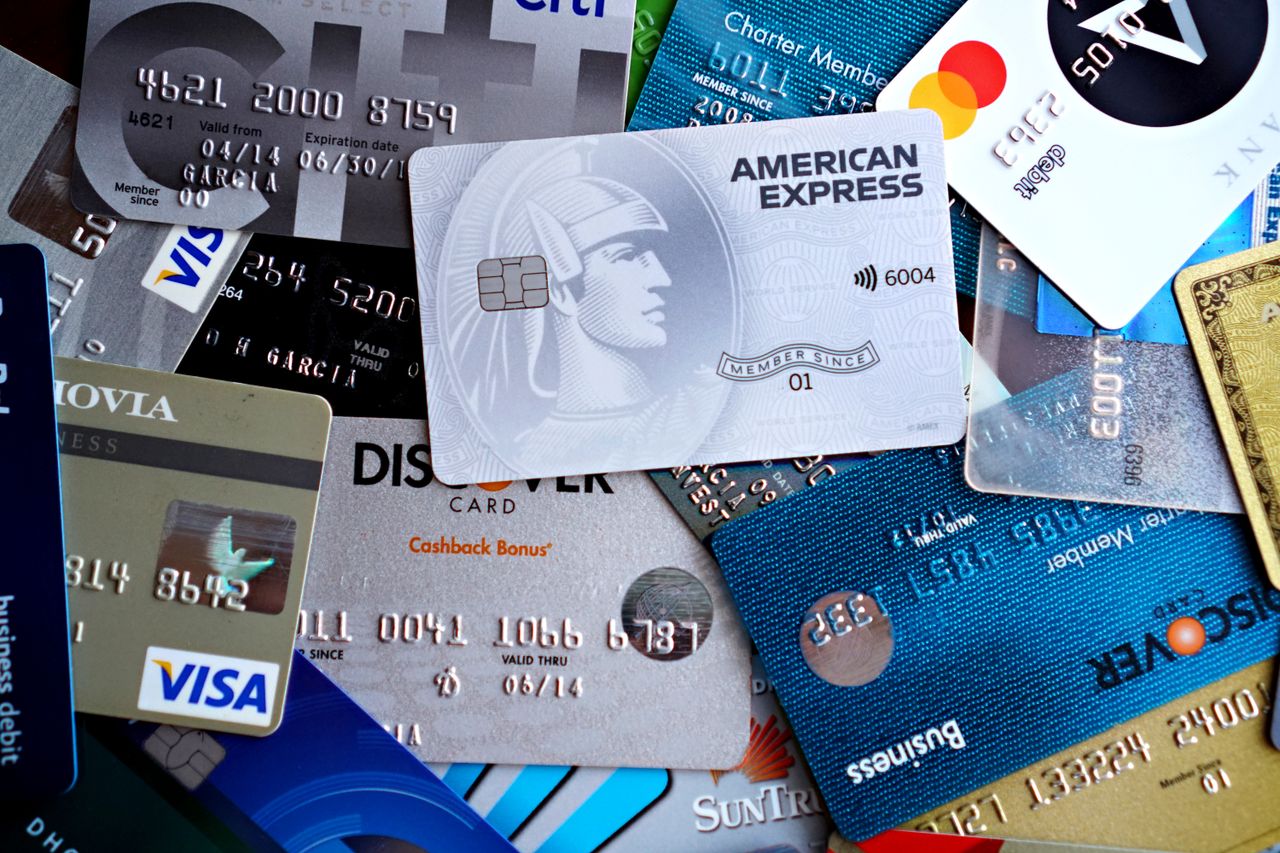
Despite everything digital, walking a young customer into a physical branch remains one of the highest-conversion tactics in retail banking, and banks structure their outreach specifically to make that happen.
How it works: A “free checking account for students” offer, a promotional bonus for opening an account in person, a campus-adjacent branch location, or a pre-approval letter that requires in-branch verification. The checking account is the entry point, not the goal.
Once you’re seated across from a banker, the conversation follows a script. You’ll be asked about your financial goals, whether you’ve started building credit yet, and whether you’re aware that your credit score affects your ability to rent an apartment or get a car loan. Then a card will be recommended — usually the one with the best margin for the bank, not the best terms for you.
Why in-branch conversion works: It’s substantially harder to say no to a person sitting in front of you than to close a browser tab. Banks know this. Financial services conversion rates for in-person consultations run dramatically higher than digital-only funnels, which is why “come in and speak with a banker” remains a persistent call to action even from banks with excellent apps.
What to do about it: If you go into a branch for a checking account, go in for a checking account. Say clearly: “I’m just here to open the checking account today.” You can always come back. There is no offer that expires that day which is genuinely worth taking on the spot.
Tactic 2: The Campus Deals You Never See
This is the tactic most young adults have no idea exists, and it’s the one with the most documented regulatory history.
Colleges sign marketing agreements with banks — the school gets paid, the bank gets access to students. Around 10 million students attend a college or university that has made a deal with a financial institution where the school directly markets or permits promotion of financial accounts, according to the CFPB.
The money involved is significant. In 2012, U.S. PIRG obtained an agreement between Ohio State University and Huntington Bank showing the school received $25 million in payments over 15 years.
These agreements are legally required to be publicly disclosed. Most aren’t. A CFPB investigation found that 80% of schools studied did not put their agreements or any information about them on their websites, and the Bureau sent warning letters to 17 colleges directing them to improve disclosure.
Then-CFPB Director Richard Cordray put it plainly: “History tells us that when schools and financial institutions get together behind closed doors, students can pay a steep price.”
What this looks like in practice: A card or account carrying your school’s logo. A financial product promoted through your student ID. A booth at orientation that feels school-endorsed. The implicit message is that your university vetted this product on your behalf. Often, what your university actually did was accept a payment.
The CFPB’s analysis of roughly 500 of these marketing deals found that many allow risky features that can lead students to rack up hundreds of dollars in fees per year. CFPB Student Loan Ombudsman Seth Frotman noted at the time: “Colleges across the country continue to make deals with banks to promote products that have high fees, despite the availability of safer and more affordable products.”
Tactic 3: The Workaround After the CARD Act
The Credit CARD Act of 2009 restricted aggressive campus credit card marketing — no more free t-shirts and pizza in exchange for applications, restrictions on marketing to under-21s without a cosigner or proof of income.
It worked, partially. The CFPB reported a nearly 70 percent decline in college credit card agreements after the law passed.
Here’s what happened next: the money moved. As the CFPB observed, marketing partnerships shifted “from credit cards toward other products such as debit and prepaid cards, which generally have fewer sunshine protections.” Cordray’s summary: “Today, financial institutions are cutting more deals with colleges and universities to market student banking products that require less disclosure.”
Meanwhile, credit card issuers found new channels. Professor Nelson, a consumer and higher-education law researcher, documented continued aggressive marketing practices and lax eligibility verification despite the CARD Act’s protections: “Card companies continue to see consumers who are under age 21 as a profitable market and, as a result, they strategically have found ways to solicit the college-age crowd, including through social media.”
The regulation constrained one channel. It did not reduce the demand for the customer.
Tactic 4: Influencer and Social Media Campaigns
This is where the CARD Act money went.
Credit card marketing on TikTok, Instagram, and YouTube works differently from traditional advertising because it doesn’t look like advertising. A creator you follow talks about “the card that changed how I travel” or “how I built my credit score to 750 in 18 months.” Disclosure is often a small “#ad” or “paid partnership” tag that most viewers scroll past.
What makes this effective on young audiences specifically: The recommendation comes from someone you have a parasocial relationship with. Research on advertising receptivity consistently shows that peer and influencer recommendations bypass the skepticism people apply to obvious advertising.
What’s usually missing from the content: The APR. Influencer credit card content overwhelmingly emphasizes rewards, sign-up bonuses, and aspirational lifestyle framing. The interest rate — the number that determines what the card actually costs you — is rarely mentioned, because it’s not a selling point.
How to evaluate it: Any credit card content that doesn’t state the APR range is marketing, not advice. That’s a useful filter.
Tactic 5: Sign-Up Bonuses Engineered Around Spending Thresholds
“Earn $200 after you spend $500 in the first three months” is one of the most common offers targeting young adults, and the mechanism is worth understanding.
The bonus is real. So is the spending requirement, and that’s the point. Minimum spend thresholds are calibrated to be slightly above what the target customer would naturally spend — enough to encourage additional purchases they wouldn’t otherwise make.
For a young adult with a $1,200 monthly budget, a $500 three-month spend requirement is easy. For someone whose baseline spending is lower, it induces spending. Either way, the issuer has established the card as a default payment method, which is worth far more to them than the $200.
The rewards devaluation problem: The CFPB has taken direct enforcement action on this. In a circular to law enforcement agencies, the Bureau warned that some credit card companies operating rewards programs may be breaking the law, including by illegally devaluing rewards points and airline miles. Points you earn under one set of terms can be worth less by the time you redeem them.
The same CFPB research found that retail credit cards — which typically offer store-specific rewards and loyalty programs — charge significantly higher interest rates than traditional cards. The store card offered at checkout with “15% off today” is frequently among the most expensive credit available to a consumer.
Tactic 6: The 0% Introductory APR Clock
Zero percent APR for 12 or 15 months is presented as a benefit, and for a disciplined user it genuinely is. The structure also creates a specific trap.
How it works against you: The introductory period encourages larger purchases than you’d otherwise make, on the assumption you’ll pay them off before the promotional rate ends. Life intervenes. When the promotional period expires, the remaining balance begins accruing at the standard rate — which for young cardholders averages 22.8%.
Some cards carry deferred interest provisions, common in retail financing: if any balance remains when the promotional period ends, interest is charged retroactively on the entire original purchase amount, not just the remainder. A $1,000 purchase with $50 outstanding at month 13 can trigger interest calculated on the full $1,000 from day one.
What to check before accepting any 0% offer: Is it a true 0% APR, or deferred interest? What is the go-to rate after the promotional period? Is there a balance transfer fee? These are disclosed, but not prominently.
Tactic 7: Gamified Apps and Credit Score Monitoring
Free credit score tracking, spending breakdowns, milestone celebrations when you hit a rewards threshold, progress bars toward the next tier.
These features are genuinely useful. They’re also engagement mechanics designed to increase the frequency with which you open the app and think about your card. Habitual app engagement correlates with higher card usage, which correlates with higher balances.
The credit score monitoring in particular does something subtle: it frames the card as a tool for improving your financial standing rather than as a debt instrument. Both framings are accurate. Only one of them is being marketed.
Tactic 8: Pre-Approval Language
“You’re pre-approved” and “you’re pre-qualified” are not the same as approved, and the distinction is legally meaningful but rarely explained.
Pre-approval means the issuer performed a soft credit inquiry against basic criteria and believes you’re likely to qualify. It does not guarantee approval, does not lock in the advertised rate, and often doesn’t guarantee the advertised credit limit. The final terms — including your actual APR, which may be considerably higher than the “as low as” rate advertised — are determined after a hard inquiry that affects your credit score.
For young adults with thin credit files, the gap between the advertised rate and the offered rate is frequently substantial.
What Credit Cards Genuinely Offer Young Adults?
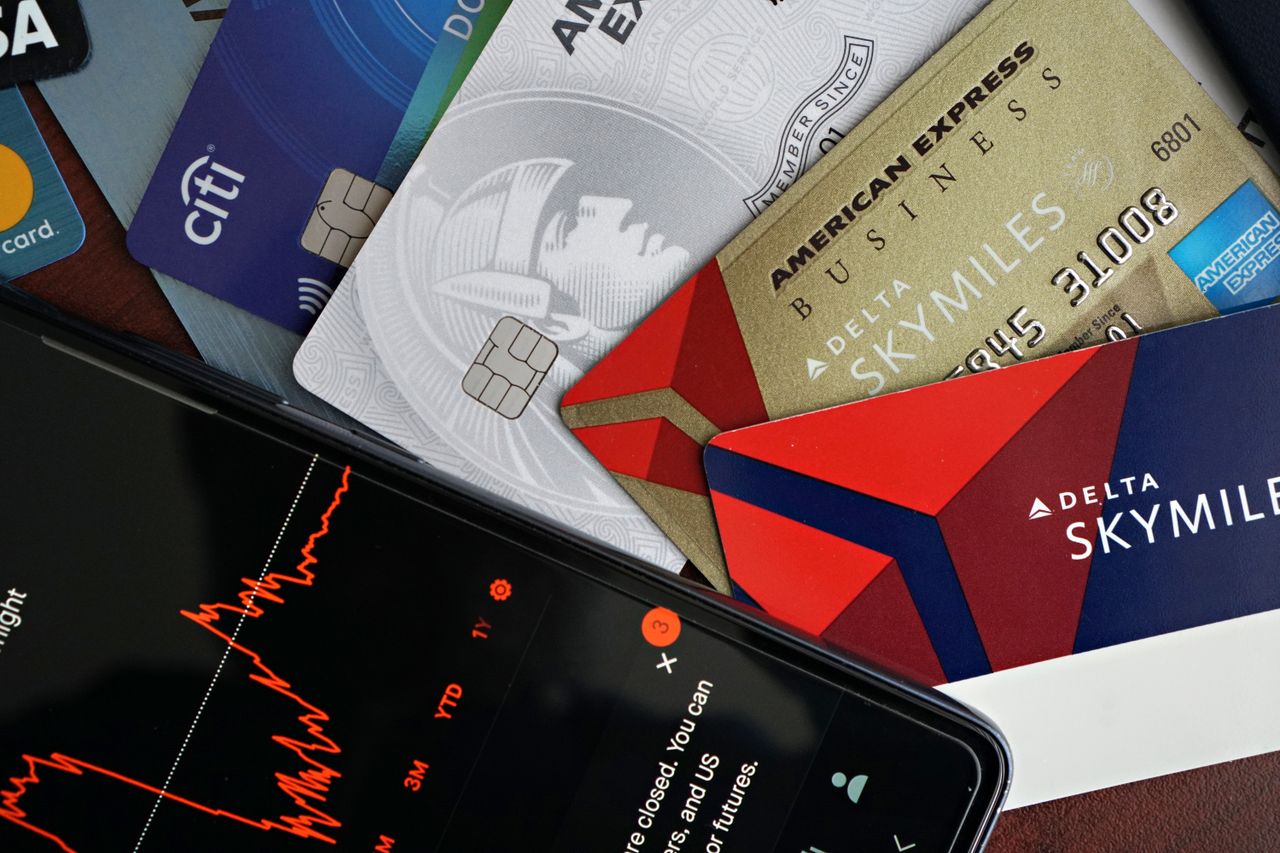
This article isn’t an argument against credit cards. Used well, a credit card is a legitimately valuable financial tool, and avoiding credit entirely creates its own problems.
Credit history is infrastructure. Landlords check credit. Employers in some fields check credit. Auto lenders and mortgage lenders check credit. Starting to build a credit history at 20 rather than 28 measurably improves your position on all of these. A thin credit file is a real disadvantage.
Fraud protection is meaningfully stronger than debit. Under federal law, credit card fraud liability is capped at $50 and most issuers waive it entirely. Debit card fraud protection is weaker, and critically, disputed debit transactions mean money is out of your checking account while the investigation proceeds. On a credit card, it’s the issuer’s money at risk during the dispute.
Rewards are real money if you pay in full. Two percent cash back on a $1,000 monthly spend is $240 a year for behavior you were already engaging in. This only works if you pay the full statement balance — carrying a balance at 22.8% APR wipes out any rewards value immediately and then some.
Emergency access. A card with available credit and no balance is a genuine safety net for a car repair or medical expense. That’s a legitimate reason to have one even if you rarely use it.
What It Actually Costs When It Goes Wrong
The math is worth seeing concretely.
At the average balance of $6,501 with a 22.8% APR and 2% minimum payments, paying only the minimum takes 18 years and 7 months to clear, with a total cost of $14,423 — more than double the original debt.
Minimum payments are not a repayment plan. They’re the mechanism that generates the industry’s interest income.
For young adults, the consequences compound differently than for older borrowers. As Carry’s 2026 analysis notes: “With fewer years on file, late payments hit Gen Z and younger Millennials’ scores harder—raising future borrowing costs and slowing recovery.” Older borrowers have decades of history diluting a single missed payment. A 22-year-old with an 18-month credit history does not.
Lower credit limits also mean a single unexpected expense spikes your utilization ratio, which damages your score independently of whether you make payments on time.
Perhaps the most concerning data point isn’t financial at all. A Bankrate 2026 survey found 49% of Americans describe credit card debt as “normal”. That normalization — more than any single statistic — is what the marketing has achieved.
How to Use a First Credit Card Without Getting Caught
Pay the full statement balance every month. Not the minimum, not “most of it.” The full balance. Every benefit of a credit card evaporates the moment you carry a balance at 20%+ interest.
Set up autopay for the full statement balance immediately. This single step eliminates the most common failure mode. Do it when you activate the card, not later.
Ignore the credit limit as a spending signal. A $3,000 limit is not $3,000 you have. Treat the card as a payment method for money already in your checking account.
Read the APR before anything else. Not the rewards structure, not the sign-up bonus. Find the APR range and the go-to rate after any promotional period.
Be skeptical of anything school-branded. Your university’s logo on a financial product means a marketing agreement exists, not that anyone evaluated whether the terms serve you. You’re entitled to see that agreement — colleges are legally required to publicly disclose credit card marketing agreements. Ask for it.
Use the CFPB’s comparison tool. The Bureau operates Explore Credit Cards, which allows comparison of more than 500 credit cards using unbiased data — not affiliate-driven “best card” listicles, which are themselves a marketing channel.
Never accept a card offer in the moment. Store cards at checkout, in-branch offers, orientation booths — all engineered around immediate decision-making. Take the paperwork, leave, and decide later. Legitimate offers survive a 24-hour delay.
The Bottom Line
Credit card marketing to young adults isn’t inherently sinister — but it is enormously well-funded, professionally engineered, and designed around a business model that profits most when you carry a balance rather than pay in full.
The tactics range from ordinary advertising to campus arrangements the CFPB has repeatedly flagged for lack of transparency. Knowing which is which doesn’t mean avoiding credit cards. It means walking into that branch, or scrolling past that influencer post, understanding what’s actually being sold and to whose benefit.
The card can be a tool. Just make sure you’re the one holding it.
Related WiseWorq Guides
- How Many Jobs Are Available in Major Banks? — what it’s like working inside the institutions running these campaigns
- Worst Financial Advisor Companies to Work For (2026) — how sales pressure inside financial services shapes what gets recommended to customers
- What Jobs Hire at 16? — for young readers earning their first income before any credit decisions
- What Jobs Can I Do From Home With No Experience? — building income rather than credit as a first financial step
- How Many Jobs Are Available in Finance? — the broader financial sector, including the compliance roles that police these practices