Consumer services covers any company that sells an experience or a service directly to individuals rather than a physical product they take home. Your barista, your airline, your streaming subscription, your dentist, your rideshare driver — all consumer services.
It’s also the single largest employment sector in the United States, and one of the most uneven. Two companies in the same sub-sector, doing nearly identical work, can offer wildly different pay, benefits, and daily experience. A cashier at Costco and a cashier at a struggling mall retailer have almost nothing in common beyond the job title.
This guide covers the major companies by sector — and, more usefully, what employees actually say about working at them, backed by Glassdoor ratings, real review quotes, and current pay data.
Quick Answer: The Sectors and Who Leads Them
| Sector | Major US Companies |
|---|---|
| Food service & QSR | McDonald’s, Starbucks, Chick-fil-A, Chipotle, In-N-Out, Dutch Bros, Panera |
| Retail & membership | Costco, Walmart, Target, Trader Joe’s, H-E-B, Kroger, Best Buy |
| Travel & hospitality | Marriott, Hilton, Hyatt, Delta, United, Airbnb, Booking Holdings, Carnival |
| Entertainment & media | Disney, Netflix, Comcast, Live Nation, AMC Theatres, Warner Bros. Discovery |
| On-demand & gig | Uber, Lyft, DoorDash, Instacart, Grubhub, TaskRabbit |
| Home & personal services | Roto-Rooter, Terminix, Great Clips, Stanley Steemer, Merry Maids, Crew Carwash |
| Healthcare services | CVS Health, Walgreens, HCA Healthcare, DaVita |
| Financial services (consumer) | Navy Federal, USAA, Chase Consumer Bank, Edward Jones |
The Best Consumer Services Employers in 2026

Glassdoor maintains a dedicated Best Places to Work — Consumer Services ranking, and it’s the most credible source available because of how it’s built: rankings come solely from employee reviews submitted between October 2024 and October 2025, with large companies requiring at least 75 ratings per category. No self-nominations, no company surveys, no fees.
The 2026 winners in consumer services include Crew Carwash, In-N-Out Burger, H-E-B, and Dutch Bros — and Glassdoor’s own framing of why they won is worth quoting: “The best ones are helping people turn high-turnover jobs into lasting careers.”
Crew Carwash
Glassdoor: #1 overall on the entire 2026 Best Places to Work list
A family-owned car wash chain with roughly 55 locations in the Midwest beat every tech company, every bank, and every Fortune 500 employer in America on employee satisfaction.
The reason, per Glassdoor’s analysis: ongoing manager training. Not an annual seminar — continuous coaching and development for every manager in the organization, so the culture doesn’t depend on any individual being naturally good at leadership. Employee trust in management at Crew runs unusually high as a direct result.
Why it matters for job seekers: This is the strongest available evidence that consumer services jobs aren’t inherently bad jobs. They’re bad when management is bad. Ask about manager training in any interview.
In-N-Out Burger
Glassdoor: #2 overall on the 2026 Best Places to Work list
Fast food — the category most associated with high turnover and disposable staffing — produced the second-best-rated employer in America.
In-N-Out’s approach is straightforward: they genuinely accommodate employees’ schedules and life circumstances rather than demanding workers reshape their lives around shift patterns. Starting pay runs well above minimum wage in every market they operate in, and store managers frequently earn six figures.
The catch: They only operate in California, Nevada, Arizona, Utah, Texas, Colorado, Oregon, Idaho, and New Mexico. If you’re not in those states, this isn’t an option.
Costco Wholesale
Glassdoor: #82 on the overall 2026 list Employee quote from Glassdoor’s own writeup: “Good pay, good benefits, friendly people, good work environment.”
Costco is the reference point for what a well-run retail employer looks like. Starting wages exceed most competitors, health benefits extend to part-time employees at relatively low hour thresholds, and internal promotion is genuinely common — a substantial share of Costco warehouse managers started on the floor.
The trade-off employees mention: The work is physically demanding, weekend and holiday hours are expected, and the pace during peak periods is relentless. Costco pays well because the productivity expectations are high.
Chick-fil-A
Glassdoor: #67 on the overall 2026 list Employee quote: “Schedule flexibility, Team Member relations, fun atmosphere.”
Chick-fil-A’s franchise model means the experience varies by operator, but the brand-level consistency in employee ratings is unusual for QSR. Sunday closure is a genuine quality-of-life differentiator that no competitor offers.
Worth knowing: Because locations are independently operated, the specific franchisee determines your actual experience. Two Chick-fil-A locations ten miles apart can be meaningfully different workplaces.
Trader Joe’s
Forbes: #1 among all large US employers in 2026, with a perfect 100 score
Trader Joe’s earned the top spot on Forbes’ Best Employers ranking — above every tech, finance, and healthcare company surveyed. The mechanics: above-market pay at every level, averaging roughly 7% annual wage increases, real health and retirement benefits, and genuine promotion from within.
The signal for job seekers: When evaluating any retail employer, ask how many current store managers started at entry level. Trader Joe’s answer to that question is why they rank where they do.
H-E-B
Glassdoor: Top-ranked consumer services employer, 2026
The Texas grocery chain consistently outranks national competitors on employee satisfaction. H-E-B operates an employee stock ownership plan giving partners equity in the company, and its reputation for treating staff well is strong enough that it’s a competitive advantage in Texas labor markets.
Starbucks
Glassdoor: 85,506 total reviews, 42,949 from US employees
Starbucks deserves its own note because of the benefits structure, which is genuinely unusual for hourly retail work:
- Health insurance eligibility at 20 hours/week — far below the 30+ hour threshold most retailers require
- Starbucks College Achievement Plan — 100% tuition coverage for a first bachelor’s degree through Arizona State University Online. Not a $2,500 annual stipend; full tuition.
- Bean Stock — restricted stock units giving employees actual equity
- Free food and beverage per shift, 30% merchandise discount
Starbucks calls employees “partners,” and the company’s own framing is that “we’re not in the coffee business serving people — we’re in the people business, serving coffee.”
The honest counterweight: Morning rush is genuinely demanding, store-level culture varies enormously by manager, and the company has faced significant labor organizing tension in recent years. The benefits are real. The daily work is hard.
The Weaker Performers
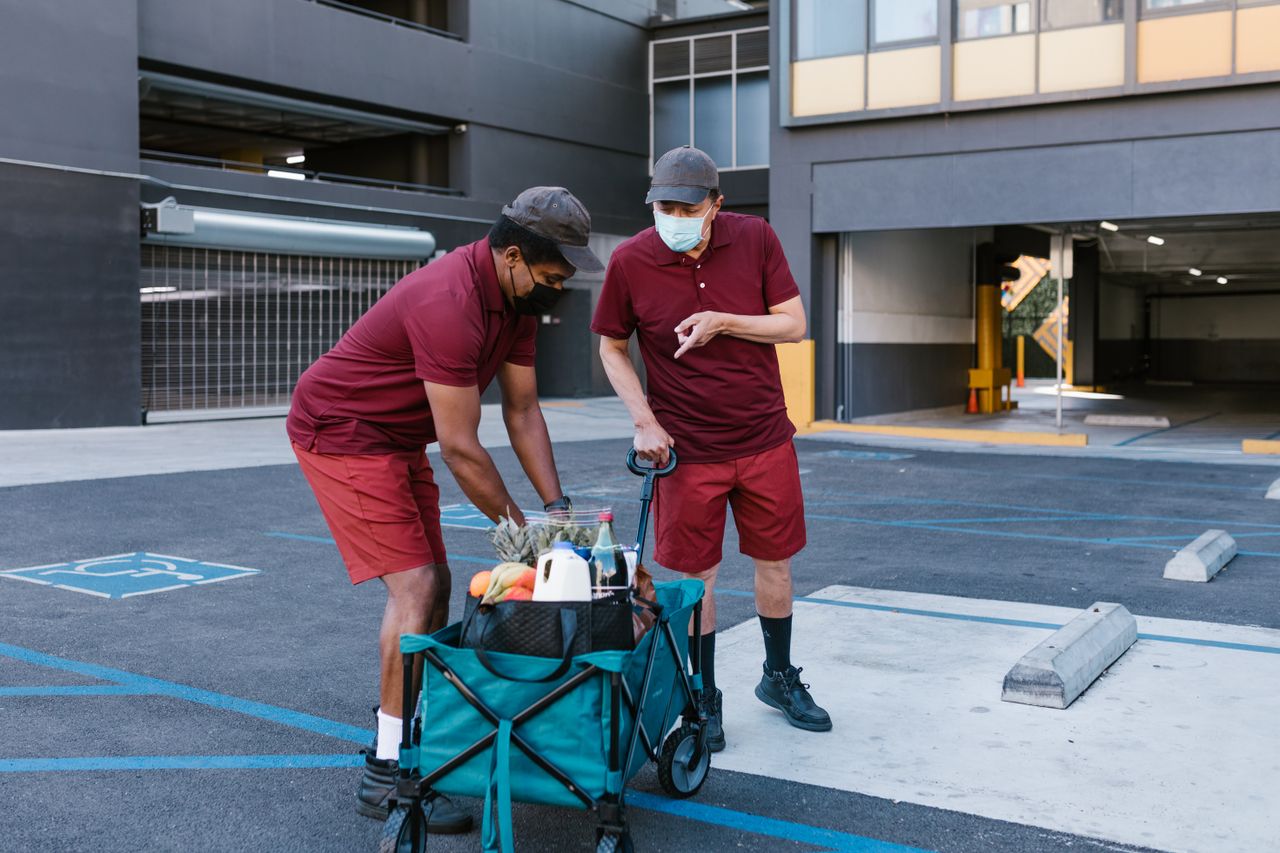
Published Glassdoor-based rankings consistently identify the same pattern among low-rated consumer services employers: low pay, thin advancement, understaffing, and management perceived as prioritizing customer metrics over staff wellbeing.
Companies that have appeared repeatedly on “worst places to work” rankings compiled from Glassdoor data include:
Steak ‘n Shake — cited at a 2.8 Glassdoor rating with only 29% of employees saying they’d recommend the job to a friend and CEO approval at 22%. The recurring theme in reviews: the company prioritizes customer satisfaction well above staff wellbeing.
Speedway — around 3.0. Employees describe a “severe lack of work-life balance, barely any break times, and a management team that lacks both clarity and sympathy,” which sits awkwardly against corporate messaging about “significant advancement potential.”
The Children’s Place — around 3.3. Common complaints: low wages, stagnant growth opportunities, dissatisfaction with upper management.
Regal Cinemas — around 3.4, with reviews describing conditions declining after the Cineworld Group acquisition. Understaffing and low wages dominate the criticism.
An important caveat on this data: These figures come from published aggregate rankings rather than a single point-in-time pull, and ratings move. Check current Glassdoor scores yourself before drawing conclusions about any specific employer. The pattern matters more than any individual number.
The Gig Economy: An Honest Reckoning
Uber, Lyft, DoorDash, Instacart, and Grubhub belong in any consumer services list, but they operate under a fundamentally different employment model — most workers are independent contractors, not employees, which changes everything about pay, benefits, and protections.
DoorDash’s Glassdoor reviews are unusually useful because the same themes repeat across thousands of submissions.
What Dashers consistently say is good:
- “Flexible hours and can work from anywhere as long as you have your phone with you” — appearing in 940 separate reviews
- “Flexible Schedule and not Managed” — in 732 reviews
- Easy signup, no interview, immediate start
What they consistently say is bad:
- “Base pay is low and unfortunately many customers won’t tip (at least in my area)” — in 260 reviews
- “There’s no insurance or benefits and an injury or vehicle failure could place you in a bad situation” — in 232 reviews
- Earnings decline as more drivers enter a market, with one reviewer noting you “make good money for two weeks only” before new drivers dilute available orders
One review captures the overall verdict bluntly: “After 1.5 years of working for DoorDash the only good thing is the flexible schedule and it ends there.”
The honest assessment: Gig platforms are genuinely useful for supplemental income, filling gaps between jobs, or covering a specific short-term need. After vehicle costs, self-employment tax, and unpaid waiting time, effective hourly earnings typically land in the $10–$15 range in most markets. They are not a substitute for employment with benefits, and the platforms don’t market themselves as one.
What Consumer Services Jobs Actually Pay
Pay in this sector varies more by employer than by role. The same job title can differ by $8/hour between two companies in the same city.
| Role | Typical Range | Notes |
|---|---|---|
| Fast food crew | $12–$18/hour | In-N-Out, Chick-fil-A at top of range |
| Retail associate | $14–$22/hour | Costco, Trader Joe’s, H-E-B well above average |
| Barista | $14.66–$16.83/hour | Plus tips, typically $1–$3/hour additional |
| Shift supervisor | $17–$22/hour | Common first promotion, 12–24 months in |
| Store/restaurant manager | $50,000–$95,000 | In-N-Out managers frequently exceed $100,000 |
| Hotel front desk | $16–$21/hour | Marriott, Hilton at upper end |
| Hotel general manager | $70,000–$150,000+ | Luxury properties significantly higher |
| Flight attendant | $28,000 start, $60,000–$90,000 senior | Seniority-driven, union contracts |
| Rideshare/delivery (gig) | $10–$15/hour effective | After vehicle costs and taxes |
| Customer success manager | $65,000–$130,000 | The highest-paying entry point in the sector |
For a fuller breakdown of the higher-paying roles, see our guide on best paying jobs in consumer services.
The Benefits That Actually Separate Employers
Base pay tells you less than benefit structure in this sector. The specific things worth checking:
Health insurance hour threshold. This is the single biggest differentiator for part-time workers. Starbucks covers partners at 20 hours/week. Many competitors require 30+, which means employers can deliberately schedule staff at 28 hours to avoid the obligation. Ask directly.
Whether sick leave is separate from PTO. Some employers give you a vacation bank and make you use it for illness. Others provide separate sick time. Over a year, the difference is real money and real quality of life.
Scheduling predictability. Several states now have “fair workweek” laws requiring advance schedule notice, but coverage is uneven. In practice, this is the most common complaint across all consumer services employers — schedules posted with days of notice, shift changes with hours of notice.
Education benefits. Starbucks (full ASU tuition), Chipotle, Target, and Walmart all run meaningful tuition programs. For someone using a service job to fund a degree, this can be worth more than several dollars per hour in wages.
Employee discount value. Trivial at some employers, genuinely significant at others. A 30% Starbucks discount for a daily coffee drinker or a Costco membership benefit compounds over a year.
Why Consumer Services Is a Legitimate Career Path
The sector gets dismissed as “just retail” or “just food service,” which misreads how careers in it actually work.
The management ladder is real and reachable. A retail or restaurant manager running a location with meaningful revenue is running a business — P&L responsibility, hiring, inventory, scheduling, customer resolution. Those are transferable general management skills, and the path from crew member to store manager typically takes three to six years at a well-run company.
Customer success is the highest-paying door. The customer-facing skills built in retail and hospitality translate directly into SaaS customer success roles, which start around $65,000 and reach $130,000+ at senior levels. This is one of the most underused career transitions available to people with strong service backgrounds.
Entry barriers are genuinely low. Few sectors let you start at 16 with no experience and reach a $70,000 management role without a degree. That accessibility is real.
The skills are automation-resistant in a way that matters. Complex customer resolution, de-escalation, and judgment under pressure remain difficult to automate. Routine transaction processing is disappearing; the human-judgment layer isn’t.
What to Ask Before You Accept a Consumer Services Job
The variance between employers in this sector is wide enough that the specific questions matter more than in most industries:
- “What’s the turnover rate on this team?” High turnover in consumer services is common; unusually high turnover at one location versus its peers signals a management problem.
- “How many hours per week do I need to qualify for health insurance?” And: “how many hours will I actually be scheduled?”
- “How far in advance are schedules posted?” Two weeks is good. Three days is a real quality-of-life problem.
- “How many current managers here started in an entry-level role?” The answer tells you whether internal advancement is practice or marketing.
- “What does manager training look like here?” Crew Carwash reaching #1 in America on the strength of this alone makes it a genuinely predictive question.
Before accepting any offer, research the specific location and employer at WiseWorq — in a sector where two stores under the same brand can be entirely different workplaces, location-level reviews are worth more than company-level averages.
Related WiseWorq Guides
- Best Paying Jobs in Consumer Services (2026) — the highest-earning roles in this sector and what they require
- Top Companies with the Best Work Culture in the US — how consumer services employers compare to other sectors on culture
- How Old Do You Have to Be to Work at Starbucks? — full breakdown of Starbucks pay, benefits, and hiring
- How Old Do You Have to Be to Work at Target? — Target’s pay, benefits, and what employees say
- What Jobs Hire at 16? — entry points into consumer services for younger workers
- Warning Signs of a Bad Company Culture — how to spot a poorly run location before you accept
- Signs of a Toxic Workplace — what to watch for once you’ve started